Hire a Lawyer for Your B2B Invoice Collection Matter

A template letter from a non-lawyer rarely changes a delinquent counterparty's posture. An attorney letter cites the contract, calculates interest under Civ. Code section 3289, and signals lawsuit risk so the invoice gets paid before I have to draft the complaint.

$575
Attorney demand letter
  • On my CA Bar letterhead (CA Bar #279869)
  • USPS certified mail + signature requested + email
  • Cites the controlling California statute with response deadline
  • One target, one matter
Accept proposal — $575
Or email me first at owner@terms.law
For complex matters
$1,200
Demand letter + draft lawsuit
  • Everything in the $575 package
  • Plus a court-ready draft complaint attached as an exhibit
  • Other side sees the lawsuit is already drafted
Accept proposal — $1,200
Or email me first at owner@terms.law

Free AI legal tools (Opus-powered)

Case Strength + Sample DL
Free AI screen of your situation — get a strength score and sample paragraph.
Causes of Action Finder
Paste your dispute. AI identifies the actionable California claims.
Contract Clause Risk Scanner
Paste any clause. AI flags risk and suggests redlines.
B2B Invoice Collection / Commercial Nonpayment

Customer not paying your invoices? An attorney demand letter changes the conversation, and California gives you levers most sellers do not know about.

California Civil Code § 1717 makes attorney-fee clauses reciprocal. Civil Code §§ 3287 / 3289 add 10% per year prejudgment interest on liquidated amounts. CCP § 337 gives you four years on written contracts. Most sellers send casual reminder emails for months when an attorney letter at the right time would have closed it in weeks.

CA Bar #279869 Flat-fee packages Demand / civil / arbitration 15+ years business law

Three flat-fee packages

Many invoice-collection matters resolve at the demand-letter stage. The escalation packages are available when the customer continues to delay.

Attorney Demand Letter

$1,500 flat fee
5-7 business days

Attorney-drafted letter to the customer's legal team or principal. Cites the contract section, the late-fee or interest provision, the attorney-fee clause, the prejudgment-interest exposure, and a hard cure deadline. Sent by certified mail plus email.

  • Letter on attorney letterhead with full statutory framing
  • Specific damages figure (principal + accrued interest + projected fee exposure)
  • Cure deadline (typically 14-21 days)
  • Settlement negotiation included if the customer responds
  • Coordination with customer's in-house counsel where applicable
Get the demand letter

Civil Complaint or Arbitration Filing

$2,500 flat fee
Phase 2 after demand letter

When the demand letter does not resolve, this package covers the actual filing: limited or unlimited civil complaint in superior court, or AAA / JAMS arbitration demand if the contract requires it. Filing fees paid by client directly.

  • Verified complaint or arbitration demand
  • Cause-of-action structure: breach of contract, common counts, account stated, prejudgment interest
  • E-filing or AAA / JAMS WebFile submission
  • Service of process coordination
  • Initial procedural calls and case-management conference
  • Default-judgment prosecution if customer fails to respond
Discuss the filing phase

Who this is for — and who it isn't

This is for you if:

  • A B2B customer is past due on $5,000+ in invoices and not responding or rotating excuses
  • You have a written contract, a course of dealing, or invoice records
  • The customer is a corporate entity (LLC, Corp, partnership) or a sole proprietor with collectible assets
  • You are willing to escalate to filing if the demand letter does not resolve
  • You want a flat-fee structure rather than hourly or contingency

This isn't for you if:

  • The matter is consumer debt collection (different statutory framework — FDCPA / Rosenthal Act)
  • The customer is in bankruptcy or has filed for dissolution
  • You only have informal communications (text messages, no contract, no invoice) and the dollar amount is under $5,000
  • You are seeking a contingency arrangement (this practice is flat-fee for pre-litigation; litigation referrals available for larger amounts)

What to send with your first email

You do not need to organize everything perfectly. The fastest way to evaluate the matter is to send the core documents and a short timeline.

My approach

Most B2B invoice-collection matters resolve before filing because California's attorney-fee shifting and prejudgment-interest rules create real exposure for slow-paying customers. The work is in framing the claim correctly and pricing the leverage.

Step 1

Send your file

Email the contract, the invoices, the communications record, and a one-paragraph description of who the customer is and what they owe.

Step 2

Case-evaluation memo

Within 5 business days I deliver a written memo addressing the legal theories, prejudgment interest, attorney-fee exposure, forum recommendation, and recommended next step.

Step 3

Demand letter or filing

Attorney demand letter to the customer. If that does not resolve, civil complaint or AAA arbitration. Each next step is flat-fee with no obligation.

Before you contact me or take action

Recent client results

"My customer had been "paying next week" for six months. Sergei's demand letter cited the attorney-fee clause and the 10% interest, and they paid in full within ten days."
— B2B services firm, anonymized paid in full at demand stage
"I had stopped sending invoices because I assumed the contract was lost. The case-evaluation memo identified that California's open-book-account theory still applied and the case was viable."
— consultant, anonymized recovery on informal engagement
"The customer claimed dissatisfaction six months after acceptance. Sergei's demand letter walked through the acceptance evidence and the contract's notice-and-cure window. They settled."
— agency client, anonymized late-defense rejected

Why work with me

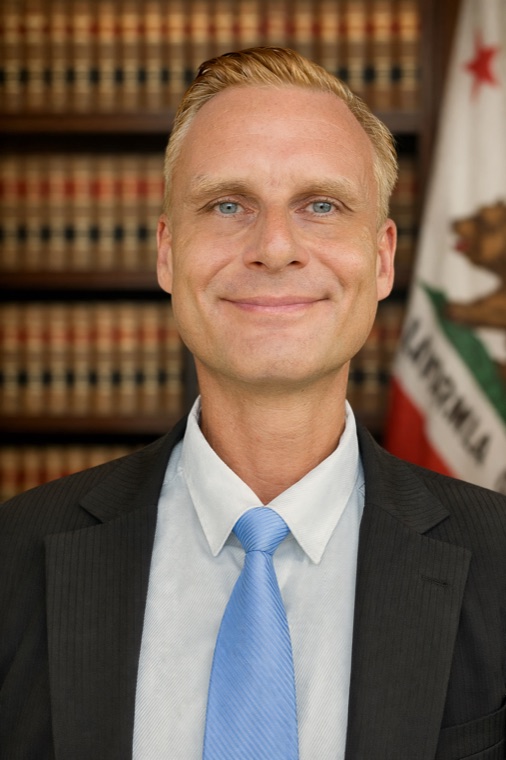
Sergei Tokmakov, Esq.

Sergei Tokmakov, Esq.

California State Bar #279869 · Licensed since 2011 · 1,800+ projects · 700+ five-star reviews

I have been a California-licensed business attorney since 2011 (CA State Bar #279869) with a steady commercial-litigation practice including B2B collection matters. I work flat-fee for the pre-litigation phases so you know the cost before the work starts.

Most B2B collection matters resolve at the demand-letter stage. When they do not, the filing-phase package handles the actual complaint or arbitration. Larger or contested matters get referred to specialty litigation counsel.

Frequently asked questions

How much does it cost to recover an unpaid invoice?

It depends on the amount, the contract clauses, and the customer's defenses. The case-evaluation memo at $349 gives you the framework. The demand letter at $1,500 resolves many matters. The filing package at $2,500 plus filing fees handles the actual lawsuit or arbitration when escalation is needed. California's attorney-fee shifting under Civ. Code § 1717 means most fees can be recovered when the contract has a fee clause.

How long do I have to file?

California: 4 years for written contracts (CCP § 337), 2 years for oral contracts (CCP § 339), 4 years for open book accounts (CCP § 337a), 4 years for account stated (CCP § 337(2)). The clock generally runs from the date the obligation became due, but partial payments and acknowledgments can reset it.

Can I recover prejudgment interest?

On liquidated, ascertainable amounts, California allows prejudgment interest at the contract rate or 10% per year (Civ. Code § 3289) from the date the obligation became due. On other claims, the legal rate of 7% applies (Civ. Code § 3287(a)).

Can I recover attorney fees?

California Civ. Code § 1717 makes attorney-fee clauses reciprocal: even one-sided clauses become mutual. If your contract has a fee clause favoring the seller, the customer's defense increases your recoverable fees substantially when you prevail. The case-evaluation memo identifies whether your contract has a fee clause.

What if the customer goes bankrupt?

The automatic stay under 11 U.S.C. § 362 halts collection until the bankruptcy case is resolved. You become an unsecured creditor and file a proof of claim. Recovery depends on the assets available. Filing the lawsuit before the customer's bankruptcy improves the position because you have a judgment that establishes priority and amount.

My contract requires arbitration. Can I sue in court anyway?

Generally no, but California Code Civ. Proc. § 1281.97 and § 1281.98 require the drafting party to pay AAA / JAMS fees on time. Untimely fee payment lets the consumer or commercial party move the case to court. The case-evaluation memo addresses arbitration enforceability with your specific contract.

The five legal levers in a B2B invoice-collection matter

  1. Breach of contract. The signed agreement (MSA, SOW, purchase order, services contract) creates the payment obligation. Damages are the unpaid balance plus consequential damages where the contract or law provides. The threshold inquiry is whether the contract was performed, delivered, or substantially complete.
  2. Common counts (account stated, goods sold and delivered, services rendered, open book account). California Code of Civil Procedure §§ 337a and 337b allow recovery on these theories even where the contract is informal or where the parties operated on an established course of dealing. Account stated requires the customer's express or implied agreement to the balance.
  3. Prejudgment interest. California Civil Code § 3287 allows prejudgment interest at 10% per year on liquidated, ascertainable amounts from the date the obligation became due. On contract debts, § 3289 applies: the contract rate if specified, otherwise 10%.
  4. Attorney-fee shifting. California Civil Code § 1717 makes attorney-fee clauses reciprocal: even a one-sided clause favoring the seller becomes mutual. Standard MSAs / SOWs include attorney-fee clauses, which materially increases the customer's exposure once an attorney is involved.
  5. Statutory enhancements (specific industries). California Business & Professions Code § 7100 (contractors), the prompt-payment statutes (Civ. Code §§ 8800-8830 for construction; Bus. & Prof. Code § 17500 for general unfair-competition), and federal Prompt Payment Act (federal contractors) all add penalties and faster timelines for specific industries.

Six B2B invoice-collection scenarios that often resolve at the demand-letter stage

Scenario 1: Customer claims dissatisfaction after delivery / completion

Services rendered or goods delivered, customer accepted, then withholds payment alleging defects or dissatisfaction. The leverage points: (a) acceptance evidence (signed delivery receipt, "looks great" emails, partial payment), (b) the contract's acceptance-and-cure mechanism, (c) the customer's failure to give written notice of defects within the contractual window.

Scenario 2: Customer rotated through "we'll pay next week" for months

The classic slow-pay. The customer is solvent but is stretching payables. Once a demand letter on attorney letterhead arrives, payment usually accelerates because the customer's in-house counsel or owner sees the attorney-fee exposure and the prejudgment interest exposure.

Scenario 3: Customer disappeared or stopped responding

Calls and emails go unanswered. Often the customer is preparing for liquidation, restructuring, or simply hoping the seller will give up. The leverage: a process-server-served demand or, for genuinely unresponsive customers, a complaint filed and served. Default-judgment recovery is faster than most sellers expect when the contract and invoices are clean.

Scenario 4: Customer alleges breach by the seller as an offset

Customer refuses payment claiming the seller breached. The leverage points: documentary record of performance, written customer acknowledgments of acceptance, prior-paid invoices from the same engagement, and whether the alleged breach was timely raised. Sellers often have a stronger position than they realize because the contract's notice-and-cure provision was bypassed.

Scenario 5: The customer is a corporate entity that has gone dark

The customer corporation is suspended, its filing status is delinquent, or its registered agent has resigned. The leverage: alter-ego liability against the principal where the corporate veil can be pierced, or successor liability if the business has been transferred to a new entity to escape obligations. The case-evaluation memo identifies whether veil-piercing facts are present.

Scenario 6: Recurring SaaS / subscription customer stops paying mid-contract

The contract has a stated term (12 months, 24 months, multi-year). Customer cancels payment mid-term. The leverage: liquidated damages clauses, accelerated balance clauses, MRR-based damages, and limitation on the customer's ability to terminate without cause. SaaS contracts also typically have arbitration clauses that affect the forum.

First-30-days action checklist after a customer non-payment

  1. Stop sending casual reminders. Once the customer is past 60 days, casual emails reset the negotiation tone. Send a written demand letter that cites the contract section, the late-fee or interest provision, and a hard cure deadline.
  2. Pull the contract and the entire correspondence record. Identify the attorney-fee clause, late-fee provision, prejudgment-interest rate, dispute-resolution forum (court vs arbitration), and venue.
  3. Document the performance / delivery. Signed acceptance, delivery receipt, partial payments, customer testimonials or emails confirming satisfaction. These defeat the "we were dissatisfied" defense.
  4. Calendar the limitations periods. California: 4 years for written contracts (CCP § 337), 2 years for oral contracts (CCP § 339), 4 years for open book accounts (CCP § 337a), 4 years for account stated (CCP § 337(2)).
  5. Decide the forum. Small claims (under $12,500 for entities), limited civil ($12,500-$35,000), unlimited civil (over $35,000), or AAA arbitration if the contract requires.
  6. Send the attorney demand letter. On attorney letterhead, certified mail plus email. Cites the contract, attaches the invoices, sets a 14-21 day deadline, references attorney-fee shifting, and signals next-step (filing or arbitration).
  7. If the customer is at risk of insolvency, file fast. Default judgment can be obtained quickly when the customer is unresponsive. Once a customer files for bankruptcy, the automatic stay halts collection until the case is resolved.
  8. Once judgment is obtained, enforce. Wage garnishment, bank levy, or judgment-debtor exam. California allows the prevailing creditor to recover post-judgment interest at 10%.
Related resources

Free interactive tools

Free, no email signup, no popup.

⚖️

Forum Decision Tree

Small claims, limited civil, unlimited civil, or arbitration — based on amount, contract clauses, and customer location.

📈

Interest + Fees Calculator

Estimate prejudgment interest and recoverable fees at California rates (10% per year under Civ. Code § 3289).

Statute of Limitations Check

When is your collection claim time-barred? California breaks down by claim type: 4 years for written contracts, 2 years for oral, 4 years for open book accounts.

Want a written answer before you decide what to do?

Email owner@terms.law with your contract, invoices, communications record, and a one-paragraph description of the customer. I will tell you whether the $349 case-evaluation memo is the right first step or whether the matter is not a fit for my flat-fee model.

Want a written answer before you decide what to do?

Email owner@terms.law with: (1) your timeline and a one-paragraph summary, (2) the key documents, and (3) what outcome you are looking for.

I will tell you whether the flat-fee package is the right first step or whether the matter is not a fit for my practice.

Email the timeline and documents →

Related on Terms.Law

Demand letter library →All practice areas →