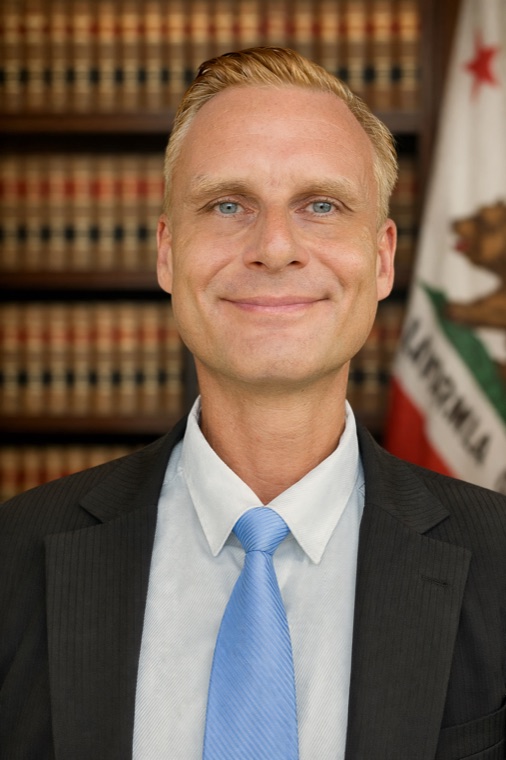
I prepare a court-ready filing kit so you can file your own California lawsuit.
A California-licensed attorney drafts the complaint on CRC 28-line pleading paper, prepares your civil case cover sheet and summons, and gives you GreenFiling and One Legal e-filing instructions. You file. You appear. You stay pro se. I never appear of record. $1,250 fixed fee with a $300 written attorney consultation for post-filing strategy review included.
$1,250Fixed-fee package
#279869CA State Bar
7-10 daysIntake to filed-ready
2011CA Bar admitted
AI Legal Analyst
Ask my AI Legal Analyst about filing your own California lawsuit?
Tap a question below for an instant, free answer (no email needed), or describe your own dispute and the analyst routes you to the right next step. Answers cover what pro se means, what is in the $1,250 package, what stays your responsibility, attorney-preparation disclosure, and court filing fees.
Common pro se filing questions, always free
Loading the AI Legal Analyst...
An attorney-prepared filing kit that looks like it came from counsel.
The $1,250 pro se filing package delivers documents drafted in attorney-quality California pleading format. You sign and file them under your own name as the self-represented party; you remain in propria persona on the record. The other side, opposing counsel, and the court see professional pleadings.
Here is exactly what I prepare:
Complaint on CRC 28-line pleading paper. Drafted to California Rules of Court formatting standards: 28-numbered-line pleading paper, footer with case caption and document title, attorney-quality causes of action with statutory citations, damages allegations, and prayer for relief. The document is signed by you as the self-represented party, not by me.
Civil Case Cover Sheet (CM-010). The Judicial Council form required at filing under California Rules of Court rule 3.220. I check the appropriate civil case categories and any complex-designation boxes that apply.
Summons (SUM-100). The Judicial Council summons form, prepared with the parties and case information. Served on the defendants after filing.
Riverside Form RI-CI032 where applicable. For Riverside County filings, the Certificate of Counsel form disclosing attorney preparation, signed by me. Required by Riverside local rule for documents prepared by counsel for self-represented parties.
Proof of Service forms. Either POS-010 (general civil) or the appropriate small-claims service form, with instructions on how to serve and complete the proof.
GreenFiling e-filing instructions. Step-by-step walkthrough of how to upload your documents to GreenFiling.com (or the equivalent local court e-filing portal), pay the filing fee, and receive your conformed copy.
One Legal service-of-process instructions. Walkthrough of how to use OneLegal.com or another approved process server to serve the summons and complaint on the named defendants, including timing under CCP section 583.210.
post-filing written strategy review. After you file, you get a $300 written attorney consultation with me to review what to expect next: the defendant's responsive pleading deadline (typically 30 days after service), case-management conference timing, and the next procedural triggers.
The line between attorney-prepared and attorney-of-record.
This is the most important distinction to understand before you hire me for the pro se filing package. The two roles are not the same.
Ghostwriting attorney (this package)
I draft the documents you sign and file
My name does not appear on the caption
I am not in the court's e-filing system as counsel
Opposing counsel communicates with you directly
The court treats you as self-represented
Discovery responses are your obligation
Hearings are attended by you
Settlement negotiations are conducted by you
I can be hired separately for hourly tasks
Separate litigation counsel
Counsel's name appears on pleadings where required
Counsel files any required notice of appearance
The court communicates with counsel as applicable
Opposing counsel communicates with litigation counsel
Counsel handles hearings and appearances
Counsel handles depositions and discovery
Counsel handles live settlement negotiations and litigation strategy
Withdrawal is governed by the applicable court rules
Fees and retainer terms are set by that separate counsel
For most contained civil matters under $50,000 with organized facts, the pro se filing package gets you the documents you need at a fraction of the cost of full representation. If the matter develops complexity that justifies bringing in counsel, you can substitute in an attorney later by separate engagement.
I describe this in detail at intake. If your matter is not a good fit for pro se, I will say so and recommend either limited-scope hourly work or a full-representation referral.
The pro se litigant's checklist.
The price is low because you do the procedural work. Going in clear-eyed about that is the difference between a successful pro se filing and a costly mistake. Here is the full list of what you own:
Calendar every deadline. Statute of limitations (typically 4 years for written contracts under CCP section 337, 2 years for oral contracts under CCP section 339, 3 years for fraud and statutory penalties under CCP section 338, with many exceptions). Defendant's responsive pleading deadline (30 days after service under CCP section 412.20). Case-management conference dates. Discovery cut-offs. Motion deadlines. I provide a deadline overview at the post-filing call, but the obligation to track them is yours.
File the documents. Upload to GreenFiling or the local e-filing portal, pay the filing fee, receive and save the conformed copy.
Effectuate service of process. Hire a process server through One Legal or an equivalent service. Serve the summons and complaint on each defendant within the time required by CCP section 583.210. File the proof of service.
Attend every hearing. Case-management conferences, motions, trial-setting conferences, mandatory settlement conferences, and trial. You appear in person or remotely as the court requires.
Respond to discovery. Form interrogatories, special interrogatories, requests for production, requests for admission, depositions. Response deadlines (typically 30 days plus mailing extensions) are strict. Missed deadlines can produce sanctions or deemed admissions. You can hire me on an hourly basis to help, but the deadline is yours to track.
Send and respond to meet-and-confer letters. California requires good-faith meet-and-confer correspondence before many motions. This is correspondence between you and opposing counsel.
Conduct settlement negotiations. You evaluate offers, you draft counter-offers, you accept or reject. Opposing counsel calls and emails go to you, not to me.
Try the case if it does not settle. Including jury selection, opening statement, examination of witnesses, evidence admission, closing argument, jury instructions, and verdict-form handling. The vast majority of California civil matters settle before trial. A small percentage do not. If yours is in that small percentage, you should know that before filing.
Comply with court orders. Every court order is an obligation. Missed compliance can produce contempt, sanctions, or case-terminating orders.
I will not surprise you with this list after you pay. I go over the obligations with you at intake, and the scope agreement names them explicitly so the boundary is clear.
The portals you will use to file and serve.
Most California civil filings go through one of two private portals that connect to court systems. You will use whichever your superior court has contracted with.
GreenFiling (greenfiling.com) is the most common e-filing portal across California superior courts. You upload your PDF documents, choose the case type, pay the filing fee with a credit card, and receive a conformed-copy PDF back with the case number printed on it once the clerk accepts the filing. Conformed copies typically come back within hours during business days, sometimes longer for first-filing rejections. The package includes a walkthrough of every screen.
One Legal (onelegal.com) is used both for e-filing in some courts and primarily for service of process. You input the defendants' addresses, pay for service, and One Legal dispatches a registered California process server to deliver the documents. After service is effected, One Legal returns a signed Proof of Service that you file with the court.
Court-specific direct portals. Some California courts (Los Angeles, San Francisco) operate their own e-filing systems or contract with multiple vendors. The package includes the specific portal walkthrough for the court where you will file.
Service of process basics.
Service must be by personal delivery to the defendant, sub-service on an authorized agent, or substituted service under CCP section 415.20 if personal service fails.
Service on a corporation goes to the registered agent for service (found on the California Secretary of State's bizfileonline.sos.ca.gov portal).
Service has to be completed within 3 years of filing under CCP section 583.210, but realistically within 60 days for most matters to avoid case-management problems.
Out-of-state service requires compliance with the destination state's service rules, often involving certified mail or a process server in that state.
Service on an out-of-country defendant typically requires Hague Convention compliance, which can take months. This is a sign your matter may have outgrown a pro se posture.
I include specific guidance on how to serve your named defendants based on what you tell me about them at intake.
What you pay the court and the expected timing.
Court filing fees are separate from my package fee. You pay them when you file. As of the current Government Code section 70611 fee schedule, the standard amounts are:
Case type
Amount in dispute
First paper filing fee
Unlimited civil
Over $35,000
$435 to $575 range, with variation by court
Limited civil
$10,001 to $35,000
$370 typical
Limited civil
$10,000 and under
$225 typical
Small claims
$1,500 and under
$30 typical
Small claims
$1,500 to $5,000
$50 typical
Small claims
$5,000 to $12,500
$75 typical
Fees change. I verify the current amounts at the destination court before you file. Some counties add small county-specific surcharges. Fee waivers are available under California Government Code section 68631 if you meet the income or hardship criteria. Form FW-001 is the application. I include the fee-waiver instructions in the package if your situation suggests eligibility.
Typical case timeline.
Filing day. Documents uploaded, fee paid, conformed copy returned. Case number assigned.
Service window. Personal service on defendants within 30 to 60 days for most matters. Proof of service filed.
Defendant response. 30 days after service (CCP section 412.20). Answer, demurrer, motion to strike, or motion to quash are common responses.
Initial case-management conference. Typically 120 to 180 days after filing.
Discovery period. 6 to 18 months depending on case complexity and court scheduling.
Trial or settlement. Most cases settle. Trial-setting conferences happen 12 to 24 months after filing in most California superior courts; trial follows in 6 to 12 more months.
These are typical ranges, not commitments. Court calendars vary significantly across California superior courts. Riverside, San Bernardino, and Los Angeles tend to be slowest; smaller-county courts can be faster.
Filing-readiness checklist + cost estimator
Are you ready to file pro se? Get an honest readiness score.
Check the boxes that match your situation. The score tells you whether you are ready to file with my package, whether you should engage me hourly first, or whether the matter is too complex for a pro se posture. The numbers are not guarantees; they are heuristics from my actual practice.
Readiness score
0 / 7
Check the boxes that apply
Recommended pathStart with intake
Estimated cost$1,250 package or hourly
Readiness heuristic only. Actual fitness for a pro se filing depends on the legal theory, the court, the counterparty, and the procedural complexity. I evaluate every matter at intake before accepting an engagement, and I will tell you honestly if pro se is not the right path. Past results do not guarantee future outcomes.
How it works
Four steps from intake to filed-ready package.
1
Intake
You send the parties, facts, documents, and target venue.
Tap for detail ↻
Intake
You submit the intake form with parties, facts, documents you have, the dollar amount in dispute, and target venue. I respond within one business day with whether the matter fits a pro se posture and which causes of action I see.
Tap to flip back ↻
2
Written scope
A signed scope agreement, then you countersign and pay.
Tap for detail ↻
Written scope
Once you accept, I send a written scope agreement covering the exact deliverables, the fee, your responsibilities, and what is not included. You countersign by email and pay. Work starts the same day.
Tap to flip back ↻
3
Draft and revise
Filing kit in 7 to 10 business days, with one revision round.
Tap for detail ↻
Draft and revise
Complete filing kit delivered within 7 to 10 business days. You review the complaint and forms, mark up anything that does not match the facts, and I revise once. The final package is filed-ready.
Tap to flip back ↻
4
File and strategy review
You file, then get a written strategy review of what comes next.
Tap for detail ↻
File and strategy review
You file using the GreenFiling and One Legal instructions in the package. After filing, you get a $300 written attorney consultation with me to review the response timeline, case-management conference, and next procedural triggers.
Tap to flip back ↻
Pricing
One package, two add-on options.
Most pro se filing matters fit the $1,250 package as scoped. If your matter needs an upstream demand letter or downstream hourly help, those exist as separate engagements.
Pro se filing services are a category where bad actors cut corners. Whether you hire me or someone else, here is what to check.
1. Written scope before payment
The deliverables, fee, and exclusions belong in a signed engagement letter.
Tap for detail ↻
1. Written scope before payment
The scope of work must be in a signed engagement letter listing every deliverable (complaint, cover sheet, summons, instructions, post-filing call), the fee, your responsibilities, and what is explicitly not included. Anyone willing to start drafting on a verbal agreement is not running a real practice. California Rule of Professional Conduct 1.5(b) effectively requires written engagement terms for fee agreements.
Tap to flip back ↻
2. The court will not help you litigate
Clerks and judges cannot give you legal advice. The pro se path is not coached.
Tap for detail ↻
2. The court will not help you litigate
A pro se filing is not a coached experience. Court clerks cannot give you legal advice. Judges will not explain procedure to you mid-hearing beyond minimal courtesy. The other side's attorney is not your advocate. If you expect the court to walk you through filings, deadlines, or evidentiary rules, the pro se path will frustrate you. Going in eyes-open is the only way it works.
Tap to flip back ↻
3. Malpractice exposure is limited in ghostwriting
My liability is bounded by the scope: the documents I prepared and advice I gave.
Tap for detail ↻
3. Malpractice exposure is limited in ghostwriting
In a ghostwriting engagement, my legal liability is bounded by the scope agreement: the documents I prepared and the advice I gave during the engagement. I am not responsible for procedural errors you make after the package is delivered, deadlines you miss, hearings you skip, or settlement decisions you make. The limitation is honest, not a trick. It is the trade-off that lets the fee be $1,250 instead of $15,000.
Tap to flip back ↻
Start an intake
Tell me about your case.
No phone tag. No "$300 Written Attorney Consultation" sales pitch. You send the facts, I respond within one business day with whether the matter fits a pro se posture, which causes of action I see, and any clarifying questions. If pro se is not the right path, I will tell you and point you to a better resource.
Related
Other ways I might be able to help.
Limited scope
California Limited-Scope Litigation
Tap for details ↻
Hourly attorney services at $300 per hour for specific tasks after filing: discovery responses, motion drafting, settlement evaluation. The complement to the pro se filing package.
Before filing, a $2,500 attorney demand letter often resolves the matter without court. The $2,500 demand-plus-draft package is also common when filing is the likely next step.
Confirm your filing deadline before you commit to the package. The wrong SOL analysis is the most common reason pro se matters fail. Free tool, instant analysis.
Pro se (also called in pro per) means filing and litigating your own lawsuit without being represented by an attorney of record. California Code of Civil Procedure section 367 confirms the right of any party to represent themselves in civil matters. The pro se filing package I prepare is an attorney-drafted set of documents you file under your own name. I never appear of record; you stay pro se from start to finish, with the option to hire me separately for limited-scope follow-up if you need it.
California has no general statute requiring a self-represented party to disclose that an attorney drafted their pleadings. The California Bar has issued formal opinions (most notably Formal Opinion No. 1995-141 and follow-up guidance) confirming that ghostwriting for self-represented litigants is permissible under the Rules of Professional Conduct. Some California courts have local rules or judicial preferences that vary; Riverside County, for instance, uses Form RI-CI032 to disclose attorney assistance on pleadings filed by self-represented parties. I include any required local-rule disclosures in the package.
Ghostwriting is a specific form of limited-scope representation in which an attorney drafts a document the client signs and files themselves, without the attorney ever appearing as counsel of record. Limited-scope is the broader category recognized under California Rules of Court 3.35 to 3.37 and CA Rule of Professional Conduct 1.2(b). All ghostwriting is limited-scope, but limited-scope also includes consulting, strategy sessions, single-event appearances under CRC 3.36, and other discrete tasks. The pro se filing package is a ghostwriting engagement.
Generally no, at the state level. The California Bar has approved ghostwriting and there is no California Rule of Court requiring across-the-board disclosure. However, individual judges have discretion to ask about preparation if the documents look professional, and certain local courts (Riverside County most notably) have adopted disclosure forms for self-represented parties. If a judge asks you a direct question under oath about who prepared a pleading, you must answer truthfully. The realistic risk is not court-imposed disclosure, but the opposing party arguing that you should be treated as represented for procedural purposes. That risk is low in most California civil matters.
This is one of the most common reasons pro se litigants stumble. Form interrogatories, special interrogatories, requests for production, requests for admission, and depositions each have their own response rules under the California Code of Civil Procedure (sections 2030 through 2034 and related). You can hire me on a limited-scope hourly basis at $300 per hour to review the request, draft your responses, and explain objection grounds. That is not part of the $1,250 pro se filing package; it is a separate engagement when the need arises.
It happens often. Once an attorney appears on the other side, the procedural pace and pressure go up: meet-and-confer letters, structured discovery, motions, and trial-readiness conferences. You can keep going pro se if you have the time and stomach for it, or you can switch to representation. You can hire me for separately scoped written review or drafting under the current fixed-fee packages. I do not provide full representation, appearances, or counsel-of-record services. I will be honest about whether the matter has outgrown a pro se posture.
No. Full representation and appearances are outside my practice. If litigation representation becomes necessary, you can retain separate counsel. If you start pro se and the matter develops in a way that requires counsel, you can hire me (or another attorney) to substitute in. The procedural mechanism is a Substitution of Attorney form (MC-050) filed with the court. Hiring counsel later is allowed and not unusual. Most clients who start pro se under this package stay pro se.
I deliver the complete filing kit within 7 to 10 business days of receiving your intake and signed scope agreement. Complex matters with multiple defendants or unusual causes of action can take longer. After your review and one revision round, the final package is ready to file. The total time from intake to ready-to-file is typically 10 to 14 business days. Rush turnaround is available for an additional fee when the statute of limitations or other deadline requires it.
No. The $1,250 is my attorney fee for preparing the package. You pay the court filing fee separately at the time of filing. Filing fees range from $225 for limited civil cases up to $10,000, $370 for limited civil cases of $10,001 to $35,000, and roughly $435 to $575 for unlimited civil cases over $35,000. Small-claims fees run $30 to $75. Fee waivers are available under California Government Code section 68631 for qualifying low-income filers. I include current fee information and the FW-001 fee-waiver application in the package if your situation suggests eligibility.
Legal notice. This page describes legal services offered by Sergei Tokmakov, Esq., a California-licensed attorney (CA Bar No. 279869). Content on this page is for informational purposes only and does not constitute legal advice or create an attorney-client relationship. An attorney-client relationship is formed only by a signed written engagement agreement for the specific scope described in this page. The pro se filing package is a ghostwriting engagement under California's recognized framework for limited-scope representation; the client remains the self-represented party of record. Past results do not guarantee future outcomes. California Rules of Professional Conduct govern this practice. Court filing fees are paid by the client at the time of filing and are not included in the $1,250 package fee.