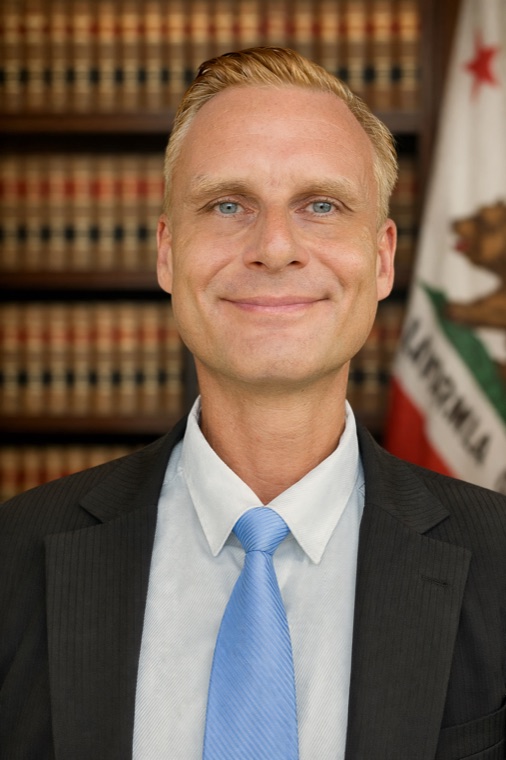
I help Californians handle their own civil case, with a real attorney on call for the parts that matter.
Limited-scope representation under California Rules of Court 3.35 to 3.37. You drive the case. I draft the pleadings, review the strategy, coach you through procedure, or step in for a discrete event. You pay only for the work you actually use.
2011CA Bar admitted
#279869CA State Bar
$240/hrLimited-scope rate
48 hrsTypical turnaround
Limited-scope is the modern alternative to a $10,000 retainer.
A traditional retainer locks you into paying for every email, every call, every review, every motion, every appearance. For people with organized matters and a budget that does not stretch to a full retainer, that model does not work.
California recognized this with Rules of Court 3.35 through 3.37. You can hire me for a specific task or a defined event, not the whole case. Examples I have done recently:
Review and refine a complaint drafted by the client before filing.
Coach a self-represented plaintiff through a small-claims appeal.
Draft an attorney-letterhead demand letter that the client sends and follows up on themselves.
Prepare a CCP §1005(b) motion opposition with the client appearing pro se at the hearing.
Evaluate a settlement offer and prepare a counter, leaving the negotiation to the client.
You stay in control of the case. I stay in my lane. The scope is written down before any work starts.
Typical includes
Written legal analysis on the specific question you ask
Drafting pleadings, motions, declarations, or correspondence
Reviewing your own draft and providing redlines
Procedural strategy memos
Settlement evaluation and counter-offer drafting
Coaching sessions before hearings or depositions you attend pro se
Document checklist for evidence gathering
Statute of limitations and procedural deadline calculation
California court e-filing logistics (GreenFiling, One Legal)
Not included unless separately scoped
Filing a notice of appearance as attorney of record
Court appearances on your behalf
Depositions, written discovery responses, or document subpoenas
Trial preparation or trial itself
Appeals
Settlement negotiations directly with opposing counsel
Indefinite case monitoring
Matters outside California
Anything in the right column can be added by mutual written agreement and an updated scope. I will not surprise you with a bill for work outside scope.
Your job, my job, and where the line is.
For limited-scope to work, the scope has to be tight. Every engagement I take is documented in a written scope agreement that says:
What I do. The exact deliverable. "Draft complaint with up to 4 causes of action, one revision round." Or "Two-hour strategy call with a written memo summarizing decisions." Or "Three demand letters to specified counterparties on a 14-day response window."
What you do. The facts you gather, the documents you collect, the filings you make, the hearings you attend, the negotiations you handle.
Out-of-scope. What is explicitly NOT my responsibility. Trial. Discovery. Appeal. Calls with opposing counsel. Filing the document I drafted. Calendaring deadlines for you.
The fee. Hourly at $240, or a fixed fee for a defined deliverable. Either way, the cap is visible before you commit.
How we stop. When the scope ends, we both confirm in writing. If you need more work, we sign a new scope. No surprise rolling engagement.
California Rule of Professional Conduct 1.2(b) explicitly allows this kind of scoping. The CA Bar has approved limited-scope as a legitimate practice model. The keys are written scope, informed client consent, and competent work within the scope.
Good fit indicators
You have organized facts: a timeline, documents, dates, dollar amounts.
The matter is in California or has a California nexus (defendant here, contract performed here, court here).
You want to handle most of the case yourself but want a CA attorney to verify the legal theory, draft the pleading, or coach the strategy.
The dispute is contained: one or two causes of action, identifiable parties, a clear factual narrative.
You can read and edit a draft, sign documents, and follow procedural instructions.
The dollar amount in dispute is large enough to justify the fee but not so large that you should hire a full litigation team.
Poor fit indicators (I will tell you)
You want me to handle everything and just need to find the cheapest way to do it. Limited-scope is not a discount retainer; it is a different model.
The matter involves emergency injunctive relief, ex parte applications, or temporary restraining orders that need same-day filing.
You face a complex multi-party case with parallel arbitrations, mass-tort posture, or class-action exposure.
You are facing criminal liability or family-law issues. I do not handle those.
The other side has already filed against you and an answer is due within seven days. There is rarely time to scope properly under that pressure.
You want me to be visible to opposing counsel and have my name on every paper. That changes the engagement to full representation.
The California framework I work under.
CRC 3.35 is the general authorization for limited-scope representation in civil cases in California superior court. It permits an attorney and client to agree in writing that the attorney's representation will be limited to specified tasks or events.
CRC 3.36 sets up the optional notice-of-limited-scope-appearance procedure. If we agree I will appear at a specific hearing (and only that hearing), I file the appropriate notice with the court, attend that hearing, and then the limited-scope obligation ends.
CRC 3.37 governs nondisclosure of attorney drafting assistance where the attorney does not appear in the case. The streamlined procedure for being relieved after a limited-scope appearance is part of CRC 3.36, not 3.37.
Rule 1.2(b) of the CA Rules of Professional Conduct says a lawyer may limit the scope of representation if the limitation is reasonable under the circumstances and the client gives informed consent. Every scope I take satisfies both prongs.
What this means for you: the framework is well-developed, the rules are clear, and there is no risk of inadvertently dragging me into the whole case. You hire me for what is written down.
Cost estimator
What will your matter actually cost?
Tell me what you need, the rough complexity, and how much of the work you plan to handle yourself. I will give you an honest range based on real California limited-scope matters.
Estimated total fee
$2,160
Range: $1,440 to $2,880
Base estimate9.0 hrs at $240
Recommended packageHourly scope
Estimate only. Actual fees depend on the documents you provide, the specific causes of action, and the scope we agree to in writing. Hourly work is billed in 0.1-hour increments. Fixed-fee engagements lock the price for a defined deliverable.
Cities I serve
California-wide, with local procedural knowledge in major superior courts.
I represent clients across California. For high-volume markets, I have separate pages covering local court procedures, e-filing logistics, and case-management quirks.
You submit a short intake form describing the matter, the documents you have, and what you want help with. I respond within one business day with scope and fee options.
2
Written scope
Once we agree on the deliverable, I send a written scope agreement covering deliverable, fee, what you do, what I do, and how we close out. You countersign, you pay, work starts.
3
Deliverable
I produce the work product within the agreed timeline. You receive the deliverable, one round of revisions if applicable, and a short closing memo summarizing decisions.
4
Close-out
Scope ends. We both confirm in writing. If you need additional work later, we sign a new scope. No surprise rolling engagement.
Pricing
Three common ways to work together.
Most matters fit one of these three packages. If yours does not, I will quote an hourly estimate before starting.
Limited-scope is a useful tool, but it is also a category where some attorneys cut corners. Whether you hire me or someone else, here is what to check.
1. Written scope agreement, not just an email
The scope of work must be in a signed engagement letter that lists the deliverable, the fee, your responsibilities, and what is excluded. If the lawyer is willing to start work on a verbal agreement or a Venmo payment, walk away. California Rule of Professional Conduct 1.5(b) effectively requires written engagement terms.
2. Fixed-fee versus hourly clarity
If the engagement is fixed-fee, the deliverable must be defined. "Draft a complaint" is too vague. "Draft a complaint with up to four causes of action and one revision round" is acceptable. If hourly, you should see a written estimate of expected hours and a clear billing-increment policy (mine is 0.1-hour increments).
3. Procedural deadline calendaring
In limited-scope, the client typically owns the deadlines. Confirm that the attorney has explained which deadlines you must track yourself (statute of limitations, response dates, hearing dates) and which ones, if any, the attorney is responsible for. A common limited-scope failure is the attorney assuming the client tracks deadlines and the client assuming the attorney does.
Start an intake
Tell me about your matter.
No phone tag. No "free consultation" sales pitch. You send the facts, I respond within one business day with scope, fee, and timing. If your matter is not a fit, I will tell you and point you to a better resource.
Limited-scope (or unbundled) representation is recognized under California Rules of Court 3.35 through 3.37 and CA Rule of Professional Conduct 1.2(b). Instead of hiring me to handle every aspect of your case, you hire me only for specific tasks: drafting a complaint, reviewing a settlement, preparing for a hearing, or coaching you through a motion. The scope is in writing before any work starts.
Self-represented litigants who want to handle most of a case but need a lawyer for key moments. Business owners with organized facts who want a CA attorney to verify the theory or refine a draft. People whose dispute does not justify a full retainer but still needs real legal help.
My standard rate for limited-scope work is $240 per hour, billed in 0.1-hour increments. Fixed-fee packages exist for specific deliverables: $575 demand letter, $1,200 demand letter plus draft lawsuit, $1,250 pro se filing package, $349 contract review. Use the calculator above for a tailored estimate.
Only if the scope agreement specifically authorizes it. Most limited-scope engagements stay ghostwritten, meaning I draft documents you sign and file yourself, and I never appear of record. CRC 3.36 allows a notice of limited-scope appearance for a defined event, which is also available if we agree on it in writing.
Yes, as long as the matter has a California nexus (CA court, CA defendant, contract performed in CA, etc.). I am licensed in California only. We work by email and secure file sharing, no in-person meeting required.
No. Initial consultations are 30 minutes for $125 or full attorney work at $240 per hour. Paying for the call ensures you get a real legal evaluation, not a sales pitch.
Civil litigation in California superior courts: contract disputes, collections, real estate, business torts, partnership and shareholder disputes, intellectual-property disputes, landlord-tenant matters, employment matters within the limited-scope-suitable range. I do not handle criminal, family, immigration, or personal-injury matters.
Ghostwriting is a specific kind of limited-scope work where I draft a document you sign and file yourself, without ever appearing of record. Limited-scope is the broader category. All ghostwriting is limited-scope, but limited-scope also includes consulting, strategy, settlement evaluation, and discrete-event appearances.
Legal notice. This page describes legal services offered by Sergei Tokmakov, Esq., a California-licensed attorney (CA Bar No. 279869). Content on this page is for informational purposes only and does not constitute legal advice or create an attorney-client relationship. An attorney-client relationship is formed only by a signed written engagement agreement. Past results do not guarantee future outcomes. California Rules of Professional Conduct govern this practice.