AI Therapy Legal Launch & Compliance
AI mental-health products operate at the intersection of software regulation, professional licensing, sensitive health information, consumer protection and patient safety. A product that begins as a conversational wellness tool can create substantially different legal exposure when it starts assessing symptoms, recommending treatment or presenting itself as a substitute for a licensed therapist.
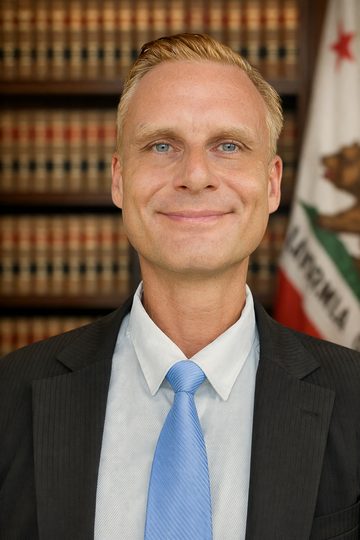
Sergei Tokmakov, Esq.Admitted in California (Bar No. 279869) and Washington (WSBA No. 65720). My law firm won the 2026 American Legal Technology Awards, Law Firm category.
I provide a structured legal assessment and documentation engagement for businesses developing AI mental-health and therapy-related products.
This engagement is accepted only where the proposed scope, applicable law, availability of local counsel where necessary and the product's clinical model permit the representation. Acceptance is not automatic, and some product models may require substantial redesign before a viable launch can be considered.
This engagement costs more than a standard software or wellness legal package because it adds professional-practice restrictions, clinical responsibility, vulnerable-user protection, crisis escalation, treatment-related claims and heightened professional and product-liability exposure to the underlying technology and privacy work.
Legal fee: from $20,000. The engagement letter confirms the exact scope and fee before any payment.
AI Therapy Legal Launch & Compliance. The engagement letter confirms the exact scope and fee in writing before any payment. Out-of-scope work is billed at $300 per hour only if you approve it in writing.
- AI mental-health chatbot and conversational-support developers.
- Digital mental-health platforms incorporating licensed clinicians into AI-assisted workflows.
- Teletherapy businesses introducing generative AI into patient-facing services.
- Clinical software companies developing AI-assisted behavioral-health tools.
- AI companion businesses whose products may attract users seeking psychological support.
- Established mental-health technology companies considering new features, training-data uses or geographic expansion.
The engagement is particularly relevant when a company needs to determine which functions it can lawfully provide, which functions require licensed professionals and which functions should be excluded from the proposed product.
1. Regulatory classification and permitted operating model
- Written assessment of whether the proposed product functions resemble general wellness support, clinical decision support, regulated medical-device software or professional mental-health services.
- Review of the relationship between product functionality, intended use and marketing claims.
- Analysis of professional licensing and unauthorized-practice concerns in the agreed jurisdictions.
- Assessment of the proposed relationship between the technology company and participating clinicians, including relevant ownership, professional independence, compensation and referral issues.
- Identification of functions requiring restriction, redesign or further legal and clinical assessment.
The federal assessment considers the FDA's general wellness guidance and clinical decision support guidance.
State-law restrictions require independent attention. For example, Nevada's AB 406 restricts certain AI systems and representations involving professional mental or behavioral health care. Utah imposes specific disclosure requirements for covered mental-health chatbots. These are different legal approaches, not interchangeable compliance standards.
2. Clinical responsibility, human oversight and crisis escalation
I review the legal allocation of responsibilities between the company, AI vendors, clinicians and users. Deliverables address:
- Representations concerning the role and availability of human clinicians.
- Written responsibility matrix for AI-generated outputs and human review.
- Legal review of clinician-developed safety and crisis-escalation protocols.
- Disclosures explaining monitoring limitations, emergency-service limitations and the circumstances under which users should seek human assistance.
- Incident documentation, escalation responsibilities and preservation of relevant records.
- Contractual and operational questions arising from unexpected or harmful outputs.
Clinical safety and efficacy decisions belong to licensed clinicians with the relevant qualifications, not to a lawyer. I am not a physician, clinician or scientist. I do not determine whether an AI intervention is medically appropriate, validate treatment protocols or design clinical responses to emergencies.
3. Minors and vulnerable-user protection
I assess the proposed age restrictions, age-assurance mechanisms, parental involvement, consent procedures and relevant privacy and chatbot requirements.
The assessment considers the Children's Online Privacy Protection Act and implementing rule, where applicable, together with relevant state-law restrictions in the agreed jurisdictions.
Particular attention is given to whether the product encourages emotional dependency, creates misleading expectations of confidentiality, misrepresents the availability of human supervision or permits interactions inconsistent with its stated user restrictions.
4. Mental-health privacy and AI training rights
- HIPAA, CMIA, Washington My Health My Data Act and CCPA applicability assessment.
- Review of applicable health-data breach notification requirements.
- Assessment of AI-provider access to therapy-related conversations, prompts, recordings and derived information.
- Analysis of permissions and restrictions concerning model training, fine-tuning, product improvement and research.
- Recommendations concerning retention, deletion, access restrictions, consent and disclosures.
- Review of analytics, advertising integrations and other third-party disclosures involving mental-health information.
Washington's My Health My Data Act deserves particular attention for consumer mental-health products. See my articles on AI mental-health chatbots under MHMDA and HIPAA versus MHMDA.
5. Legal documents and commercial agreements
I prepare or revise an agreed set of documents selected from the following:
- Terms of Service or End User License Agreement.
- Privacy Policy and applicable consumer health data privacy policy.
- AI disclosures, informed-consent language and product limitations.
- Clinician participation or services agreement.
- Business Associate Agreement or Data Processing Agreement.
- Internal legal responsibility and incident-escalation documentation.
Vendor contract review addresses data-use restrictions, confidentiality, training permissions, incident reporting, liability, ownership and termination.
6. Advertising, subscriptions and launch roadmap
I review representative treatment, efficacy, safety and AI-capability claims against the legal standards discussed in the FTC's Health Products Compliance Guidance.
The engagement also addresses testimonials, subscription terms, cancellation, refunds and contractual risk allocation. The final roadmap identifies launch restrictions, outstanding clinical and technical decisions, implementation priorities and requirements for expansion.
- Detailed product specifications and representative conversations.
- Proposed clinical model and the identities, roles and qualifications of participating clinicians.
- Target jurisdictions, age groups and intended user populations.
- Existing safety protocols, escalation procedures and human-review arrangements.
- Clinical evidence and assessments already obtained from qualified professionals.
- AI vendor agreements, data-flow descriptions and existing legal documents.
- Proposed marketing claims, subscription arrangements and product launch plans.
Use synthetic or appropriately redacted records during intake rather than submitting identifiable therapy conversations or patient files.
| Component | Starting scope |
|---|---|
| Products | One product and one defined clinical or nonclinical operating model. |
| Jurisdictions | Applicable U.S. federal law, California and Washington, subject to acceptance and local counsel requirements. |
| Legal documents | Up to eight customized documents. |
| Vendor agreements | Review of up to three existing agreements. |
| Product assessment | One agreed set of conversational workflows and safety-related user journeys. |
| Advertising | Up to 30 distinct claims across 15 representative promotional assets. |
| Revisions | Two consolidated revision rounds within the original scope. |
A nationwide launch requires separately scoped state-law analysis. Additional clinical models, provider structures, jurisdictions and materially different product features may require further work.
The engagement excludes clinical care, medical advice, clinical trials, scientific validation, clinical protocol development, technical safety testing, professional license applications, FDA submissions, litigation, regulatory defense and outside professional fees.
Additional accepted legal work may be separately quoted or billed at $300 per hour under an agreed scope extension.
Submit a written request through the quote request page, including the product's intended purpose, clinical model and proposed jurisdictions. I assess whether the matter is suitable for acceptance before providing an engagement letter for electronic signature. Payment follows execution of the engagement letter.
All communications and deliverables are handled in writing, without phone calls or video meetings.
Frequently asked questions
Can I legally launch an AI therapist without employing licensed clinicians?
There is no universal answer applicable to every state and product design. Some product functions and representations can be prohibited or restricted. The engagement evaluates the proposed model and may identify a need to remove features, involve licensed professionals or exclude particular jurisdictions. See Is AI therapy legal?
Does having a licensed clinician on the advisory board resolve licensing concerns?
Not automatically. The assessment considers what the clinician actually does, the nature of the services delivered to users, the clinician's authority over treatment decisions and the licensing requirements applicable to the operating model.
Will you certify that my chatbot is clinically safe?
No. Clinical validation and safety judgments must be made by appropriately qualified clinicians and other professionals. My role is to address the associated legal obligations, contractual responsibilities, representations and risk-management arrangements.
Can I train an AI model using therapy transcripts?
Only after the applicable legal permissions and restrictions have been assessed. The analysis may involve patient confidentiality, health-privacy requirements, vendor contracts, consent and the proposed treatment of identifiable information. See AI therapy training data.
Can the engagement cover all 50 states?
Nationwide analysis is available for separate scoping, subject to acceptance, the proposed clinical model and participation of local counsel where needed. The starting fee does not include a 50-state legal opinion.
What happens if the assessment identifies a prohibited product feature?
I explain the issue and available legal alternatives within the agreed scope. Depending on the findings, the appropriate recommendation may be to restrict a feature, change the operating model, exclude a jurisdiction or defer launch. The engagement does not guarantee that the original product concept can proceed.
Ask the AI Legal Analyst about your product
Describe your product and markets in a few sentences. You get general legal information right away; scoping and advice come in the engagement letter.
Sergei Tokmakov, Esq., Terms.Law. Admitted to practice in California (State Bar No. 279869) and Washington (WSBA No. 65720). My law firm won the 2026 American Legal Technology Awards in the Law Firm category.
I handle matters in writing: no calls or video meetings. Contact: owner@terms.law.