AI Wellness Legal Launch & Compliance
Launching an AI wellness product requires more than a Privacy Policy, Terms of Service and a disclaimer stating that the product does not provide medical advice. The legal analysis depends on what the technology actually does, what users are encouraged to rely on, how sensitive information is handled and what the business promises in its advertising.
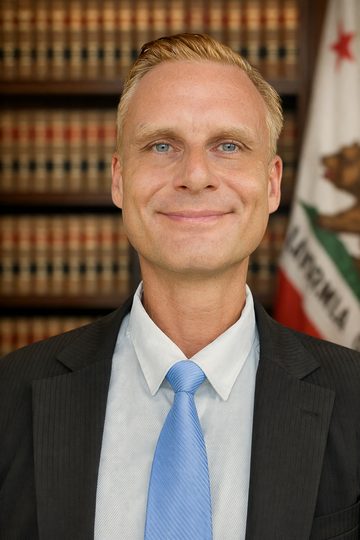
Sergei Tokmakov, Esq.Admitted in California (Bar No. 279869) and Washington (WSBA No. 65720). My law firm won the 2026 American Legal Technology Awards, Law Firm category.
I provide an integrated legal launch engagement for AI wellness businesses that need to resolve these questions before releasing a product, entering commercial partnerships or expanding an existing service.
This engagement goes substantially beyond a standard software legal package because it combines health-product classification, sensitive-data regulation, AI-specific contractual risks, advertising substantiation and product-level compliance analysis with customized legal documents.
Legal fee: from $10,000. The engagement letter confirms the exact scope and fee before any payment.
AI Wellness Legal Launch & Compliance. The engagement letter confirms the exact scope and fee in writing before any payment. Out-of-scope work is billed at $300 per hour only if you approve it in writing.
- AI-powered wellness, fitness, sleep and nutrition applications.
- Personalized lifestyle coaching and habit-management platforms.
- Stress-management, mindfulness and emotional-wellness products.
- Applications that analyze information from wearable devices.
- AI health-information assistants designed for nonclinical purposes.
- Consumer health platforms introducing AI-generated recommendations, personalized content or conversational interfaces.
- Established wellness businesses adding AI features to an existing product.
If your product is designed to provide psychotherapy, diagnose mental-health conditions or participate in clinical treatment, the AI Therapy Legal Launch & Compliance engagement may be more appropriate, subject to its acceptance requirements.
1. Product classification and regulatory assessment
I evaluate the product's intended use, functionality, user population, promotional language and foreseeable reliance on its recommendations.
- Written assessment of the boundary between general wellness functionality and potentially regulated medical-device software.
- Review of representative AI outputs, onboarding screens and product descriptions.
- Identification of features and claims that may materially change the regulatory classification.
- Recommendations for product restrictions, disclosures and modifications that address identified legal risks.
The assessment considers the FDA's General Wellness: Policy for Low Risk Devices guidance and, where relevant, its Clinical Decision Support Software guidance.
Calling an application a wellness product does not, by itself, establish its regulatory status.
2. Health privacy and AI data-use assessment
I examine the information the product collects, generates, stores and transfers, including information inferred from conversations, questionnaires and connected devices.
- HIPAA applicability and business-associate analysis.
- California Confidentiality of Medical Information Act (CMIA) assessment.
- Washington My Health My Data Act applicability and obligations.
- California Consumer Privacy Act applicability, including relevant sensitive-information requirements.
- Assessment of the FTC's Health Breach Notification Rule.
- Review of AI training, fine-tuning, evaluation, analytics and other secondary uses of customer information.
- Recommendations concerning retention, deletion, consent, advertising disclosures and vendor access.
These are separate legal inquiries. The absence of HIPAA coverage does not eliminate other health-data obligations. Relevant authorities include HHS guidance concerning health applications and business associates, California's health-information laws, Chapter 19.373 RCW, the California privacy statutes and regulations and the FTC's Health Breach Notification Rule guidance.
3. Customized product documents and vendor contracts
I prepare legal documents that reflect the assessed product and its actual information practices.
- Terms of Service or End User License Agreement.
- Privacy Policy.
- Separate consumer health data privacy policy, where applicable.
- Product-specific consent, AI disclosure and onboarding language.
- Data Processing Agreement or Business Associate Agreement, where appropriate.
- Review and redlining of agreed AI-provider or other material vendor contracts.
Vendor review addresses training permissions, permitted processing, data retention, subprocessors, confidentiality, security commitments, ownership and contractual allocation of liability.
4. Advertising, subscriptions and consumer protection
- Review of representative health-benefit claims, AI capability claims and promotional materials.
- Claims matrix identifying higher-risk statements, supporting evidence needed and potential revisions.
- Review of testimonials and endorsements.
- Assessment of checkout, free trials, recurring billing, cancellation and refund language.
- Recommendations concerning limitation-of-liability provisions and product disclosures.
The FTC's Health Products Compliance Guidance explains the substantiation expectations applicable to health-benefit representations. Online subscription review also considers 15 U.S.C. § 8403 and, where applicable, California's Automatic Renewal Law.
5. Implementation and expansion roadmap
I provide a prioritized written roadmap identifying unresolved issues, proposed product changes, implementation responsibilities and additional legal work that may become necessary as the business grows.
The roadmap distinguishes matters that should be addressed before launch from continuing obligations and questions triggered by future features, markets or commercial relationships.
- Product description, intended audience and proposed launch jurisdictions.
- Screenshots, user journeys, demonstration materials and representative AI responses.
- List of AI models, hosting services, analytics tools and other vendors.
- Available data-flow diagrams and descriptions of training and retention practices.
- Existing contracts, policies, consent screens and marketing materials.
- Available evidence supporting proposed health-benefit claims.
- Pricing, subscription and cancellation arrangements.
Please provide synthetic or appropriately redacted examples instead of identifiable patient or customer records unless a suitable disclosure arrangement has been established.
| Component | Starting scope |
|---|---|
| Products | One product with one defined operating model. |
| Jurisdictions | Applicable U.S. federal law, California and Washington. |
| Legal documents | Up to five customized product-facing or commercial documents. |
| Vendor agreements | Review of up to two existing agreements. |
| Advertising | Up to 20 distinct claims across 10 representative promotional assets. |
| Product review | One agreed set of user journeys, including onboarding and checkout. |
| Revisions | Two consolidated revision rounds within the original scope. |
Related versions of the same application may be included when they share materially identical functionality, data practices and legal arrangements. Distinct products and materially different business models require separate scoping.
Nationwide state-law analysis is not included automatically. Additional jurisdictions and local counsel arrangements are identified separately.
The engagement does not include FDA submissions, device clearance applications, clinical or scientific validation, cybersecurity testing, software implementation, litigation, regulatory investigations, outside counsel fees or independent scientific review.
I provide legal analysis and recommendations. I do not certify the clinical effectiveness, safety or technical performance of an AI system.
Additional work outside the agreed scope may be separately quoted or performed at $300 per hour under an agreed scope extension.
- Submit a written description of your product through the quote request page.
- If the matter is suitable for my practice, I provide a scoped engagement letter for electronic signature.
- After the engagement letter is signed, payment completes the commencement process.
I conduct the engagement in writing, without phone calls or video meetings. Written communication provides a record of the facts, recommendations and decisions underlying the legal work.
For additional background, visit the AI Health & Wellness Law hub, the Healthcare SaaS hub and the AI Advertising & Marketing Compliance hub.
Frequently asked questions
Is my wellness application automatically outside FDA regulation?
No. The assessment depends on the particular software functions, intended uses and applicable legal framework. Marketing the product as general wellness is not sufficient if its actual functionality or representations indicate a medical purpose.
Do I need HIPAA compliance if my application sells directly to consumers?
Not necessarily. HIPAA applicability depends substantially on the relationships and activities involved. Consumer health applications may instead, or additionally in appropriate circumstances, encounter state health-privacy requirements and other federal obligations.
Can I use customer conversations to improve my AI model?
That requires a separate assessment of the information involved, applicable privacy restrictions, user permissions, vendor terms and the proposed training process. A broad statement in the Terms of Service is not a universal authorization.
Does the engagement authorize a nationwide launch?
No. The starting scope covers applicable federal law, California and Washington. A broader state-law assessment is separately scoped, with local counsel involved where needed.
How is this different from purchasing ordinary software legal documents?
The engagement examines the underlying product, health claims, AI functionality and information practices before preparing the documents. The resulting recommendations address operational decisions that a conventional Terms of Service and Privacy Policy cannot resolve by themselves.
Can you work with a product that has already launched?
Yes, subject to intake and scope. The engagement can assess an existing operating model, identify remediation priorities and revise the agreed documents. Existing disputes, investigations and substantial historical exposure require separate consideration.
Ask the AI Legal Analyst about your product
Describe your product and markets in a few sentences. You get general legal information right away; scoping and advice come in the engagement letter.
Sergei Tokmakov, Esq., Terms.Law. Admitted to practice in California (State Bar No. 279869) and Washington (WSBA No. 65720). My law firm won the 2026 American Legal Technology Awards in the Law Firm category.
I handle matters in writing: no calls or video meetings. Contact: owner@terms.law.