Is AI Therapy Legal in the U.S.? A Regulatory Guide for AI Mental Health and Wellness Startups
A guide to AI therapy laws, mental health chatbots, FDA regulation, professional licensing, health data privacy and startup compliance in the U.S.
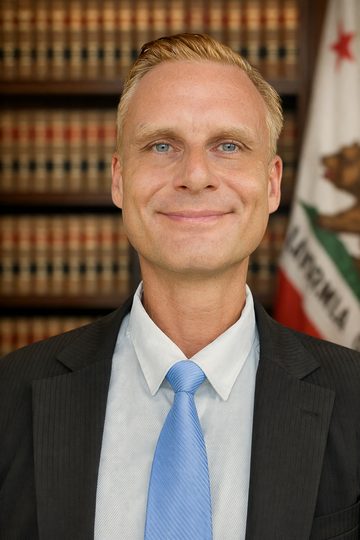
Sergei Tokmakov, Esq.Admitted in California (Bar No. 279869) and Washington (WSBA No. 65720). My law firm won the 2026 American Legal Technology Awards, Law Firm category.
Legal and regulatory review date: November 29, 2026.
Key takeaways
- There is no single U.S. law that authorizes or prohibits every form of AI mental health support. Legality depends on the product's functionality, intended use, marketing, clinical model and available jurisdictions.
- Several states expressly restrict AI-delivered psychotherapy. Additional state laws regulate mental health chatbots, professional representations, emotional companionship and interactions with minors.
- Calling a product a wellness assistant, coach or companion does not establish that it falls outside professional licensing or medical device laws.
- FDA medical device classification and state professional licensing are separate questions. Satisfying one does not resolve the other.
- Mental health chatbots can collect legally protected consumer health data even when their operators are not subject to HIPAA.
- Disclaimers, human oversight, crisis escalation, age restrictions and responsible data practices must be reflected in actual product functionality, not merely in terms of service.
- Startups should establish a jurisdiction-specific launch strategy before accepting users nationwide, particularly when offering personalized mental health interventions or serving minors.
AI-powered mental health products can operate lawfully in the United States, but an autonomous chatbot that provides psychotherapy is substantially more difficult to launch than a general wellness application or software that assists licensed clinicians.
The distinction matters because a mental health startup can simultaneously encounter professional licensing laws, state-specific AI restrictions, federal medical device regulation, consumer protection laws, health data privacy requirements and civil liability.
There is no general federal AI therapy license. There is also no universal exemption for companies that describe their products as informational, experimental or intended for wellness purposes.
The legal analysis starts with what the product actually does, what its developers intend it to do, what users reasonably understand it to do and where those users are located.
AI therapy is a commercial description rather than a uniform legal classification. It can refer to several materially different products.
General wellness applications
A wellness application might provide guided meditation, journaling prompts, general stress-management exercises, sleep routines or educational information about emotional well-being.
These functions generally present a more manageable regulatory profile when they do not diagnose mental disorders, provide individualized clinical treatment or represent themselves as substitutes for professional care.
However, a journaling application that analyzes conversations to infer psychiatric conditions, produces personalized treatment recommendations or adjusts interventions based on clinical symptoms requires a different assessment.
AI coaching and emotional companionship
Coaching applications may assist users with motivation, communication, productivity, goal setting or everyday challenges. Companion chatbots may simulate friendship, empathy or emotional connection.
Neither category is automatically exempt from regulation. A companion chatbot may trigger dedicated chatbot safety legislation even if it makes no medical claims. A coaching application may cross into regulated mental health practice if it begins providing individualized psychological treatment.
Features that encourage emotional dependence, discourage contact with real people or exploit a user's psychological vulnerabilities introduce additional consumer protection and liability concerns.
Autonomous AI therapy
The highest-risk model is a chatbot that independently evaluates a person's mental health, recommends therapeutic interventions, manages symptoms or conducts ongoing psychotherapy sessions.
Advertising such a product as an affordable replacement for a psychologist, psychiatrist or licensed therapist compounds the licensing, FDA and advertising risks.
Clinician-assisted AI
A separate business model supplies software to licensed mental health professionals. Examples include scheduling, documentation, transcription, administrative workflows and preparation of materials that clinicians independently evaluate.
This can be a more viable approach, but state laws differ on what assistance is permitted. Some allow clinician-reviewed recommendations. Others impose much narrower restrictions on the use of AI in direct patient care.
Having a licensed psychologist on the startup's advisory board is not equivalent to having a properly licensed professional responsible for each patient's care.
State legislatures have moved beyond general concerns about artificial intelligence. Several have enacted laws specifically addressing AI-generated mental health services, while others regulate representations of professional competence, chatbot privacy and emotional companionship.
These laws are not interchangeable. Illinois substantially restricts autonomous psychotherapy. Utah imposes specific obligations on mental health chatbot suppliers. California regulates false indications of healthcare licensure and companion chatbot safety.
State-law comparison
| State and legislation | Principal effective date | Restrictions and requirements | Exceptions and enforcement |
|---|---|---|---|
| Illinois HB 1806, Public Act 104-0054, 225 ILCS 155 |
August 1, 2025 | Restricts the provision of therapy and psychotherapy to licensed professionals. Prohibits specified AI therapeutic communications, independent clinical decisions, unreviewed treatment recommendations and detection of emotions or mental states within the regulated professional context. | Limited administrative and supplementary functions remain permissible. Religious counseling, peer support and qualifying self-help activities are excluded. The Department of Financial and Professional Regulation may impose civil penalties of up to $10,000 per violation. Official agency guidance. |
| Nevada AB 406, Chapter 283, NRS 433.567 and 629.610 |
July 1, 2025 | Restricts AI systems programmed or represented as providing professional mental or behavioral healthcare. Separately restricts healthcare professionals' use of AI in direct patient care. | Distinguishes qualifying self-help functions, administrative assistance and certain school-related uses. Provides for regulatory oversight, professional discipline and civil penalties of up to $15,000 per violation for specified prohibited conduct. Enacted legislation. |
| Utah HB 452, Utah Code Chapter 13-72a and Section 58-60-118 |
May 7, 2025; amended chatbot definition effective May 6, 2026 | Regulates disclosures, advertising, sharing of identifiable health information and chatbot inputs. Establishes a limited affirmative defense connected to qualifying mental health chatbot safety policies. | Excludes certain scripted tools and services connecting users to human providers. Contains narrow statutory data-sharing exceptions. Consumer protection and professional licensing authorities have separate enforcement roles. Current statutory definition. |
| California AB 489, Chapter 615, Business and Professions Code Sections 4999.8-4999.9 |
January 1, 2026 | Prohibits AI-related advertising and functionality that falsely indicate an appropriately licensed healthcare professional is providing services. | Does not categorically prohibit accurately described wellness software. Relevant professional licensing boards and enforcement authorities may take action. Board of Psychology advisory. |
| Vermont H.816, Act 156, 18 V.S.A. Section 7115 and related licensing amendments |
June 17, 2026 | Restricts providing or advertising mental health services without a qualified mental health professional. Conditions professional use of AI on privacy compliance and professional review and approval. | Provides a research exception and addresses appropriately supervised use of software with FDA authorization. Consumer protection and professional licensing enforcement apply. Enacted legislation. |
| Tennessee SB 1580/HB 1470, Public Chapter 647, Tenn. Code Sections 33-1-205 and 47-18-104 |
July 1, 2026 | Restricts representations by AI developers and deployers that an AI system is or can act as a qualified mental health professional. | Enforced through consumer protection law. The representation-based prohibition is not a general ban on all wellness applications. Official legislative record. |
| Rhode Island H 7349 Substitute A and companion legislation, General Laws Chapter 40.1-5.5 |
June 2026; effective upon passage | Restricts independent AI therapeutic decisions, treatment recommendations and therapeutic communications outside a qualifying professional treatment relationship. | Includes exceptions addressing qualifying self-help, peer support, religious counseling, federally reviewed software and approved research. Provides for investigation by the Executive Office of Health and Human Services and confidentiality-related enforcement. Legislative text. |
| Maine LD 2082, Public Law 2025, Chapter 687, 10 M.R.S. Section 1500-EE and related professional licensing provisions |
July 29, 2026 | Restricts AI-delivered psychotherapy and prohibits professionals from delegating independent therapeutic decisions and specified therapeutic communications to AI. | Allows qualifying administrative and limited supplementary functions, subject to applicable review, recording, notice and consent requirements. Includes an approved research exception. Consumer protection authorities and licensing boards enforce applicable provisions. Enacted legislation. |
| Colorado HB 26-1195, Chapter 358, C.R.S. Sections 12-245-224.5 and 6-1-1705.2 |
August 12, 2026 | Restricts autonomous psychotherapy and deceptive representations of professional equivalence. Conditions AI participation in therapeutic communications on real-time professional involvement and other safeguards. | Allows qualifying administrative, research, educational, nonclinical self-help and other specifically authorized functions. Consumer protection authorities and professional licensing boards enforce relevant provisions. Official legislative record and enacted text. |
This table identifies major AI mental health enactments. It is not a comprehensive clearance of every state's professional licensing, telehealth, consumer protection or chatbot legislation.
Illinois, Nevada and Maine: particularly restrictive clinical models
Founders should pay particular attention to the distinction between a professional using AI internally and a patient receiving therapy directly from an AI system.
Under the Illinois Wellness and Oversight for Psychological Resources Act, employing a licensed clinician does not necessarily permit the company to delegate therapeutic conversations to a chatbot. Maine likewise places substantive restrictions on which professional functions can be delegated.
Nevada's law reaches product programming as well as representations about professional mental healthcare. Removing the word therapy from an advertisement may therefore be insufficient if the underlying software remains designed to provide prohibited services.
For these jurisdictions, a viable launch strategy may require restricting particular features, maintaining a separate nonclinical product or excluding the jurisdiction altogether.
Utah: a distinct mental health chatbot regulatory framework
Utah's legislation is particularly important for direct-to-consumer applications. Its current definition of a mental health chatbot considers what the application is represented as doing and what a reasonable user would believe it can do.
Section 13-72a-201 restricts third-party sharing and sale of identifiable health information and user inputs. Its exceptions are narrow and should be evaluated before transferring conversations to model providers, analytics vendors or other contractors.
Section 13-72a-202 regulates advertising through mental health chatbots, including restrictions on using user inputs to select advertisements.
Section 13-72a-203 requires disclosures that users are interacting with AI, including before access and in specified subsequent interactions.
Utah also provides a mechanism for suppliers to submit a mental health chatbot safety policy under Section 58-60-118. The resulting affirmative defense is limited. It is not an AI therapy license, government endorsement or immunity from civil liability.
AB 489: AI cannot falsely present itself as a licensed healthcare professional
California AB 489 addresses misleading indications of healthcare licensure, including those created through an application's functionality.
The California Board of Psychology's advisory explains the legislation's implications for AI developers, deployers and representations of licensed healthcare services.
A chatbot's name, avatar, professional title, onboarding screens and generated responses should be reviewed together. A virtual psychologist persona creates a different risk profile from an accurately identified journaling assistant.
Disclosing the software's artificial nature in a privacy policy does not necessarily correct a misleading impression created elsewhere.
SB 243: companion chatbot safety requirements
California's SB 243, codified at Business and Professions Code Sections 22601-22606, became effective January 1, 2026.
It regulates qualifying companion chatbots designed to adapt to users and facilitate sustained social relationships. Specified customer service, productivity, technical assistance and other noncompanion functions are excluded.
Covered operators must address misleading human representations and implement suicide and self-harm response protocols. Additional safeguards apply when operators know users are minors, including periodic AI disclosures, break reminders and restrictions involving sexually explicit content.
Annual reporting to California's Office of Suicide Prevention begins July 1, 2027. The statute also provides a private remedy for injured individuals, including specified damages and injunctive relief.
Consequently, removing clinical functionality does not necessarily remove California regulatory exposure. An application can be a nonmedical companion and still fall within SB 243.
Additional California legislation enacted in 2026
California enacted further legislation during 2026, including SB 1119, known as Adam's Law, addressing chatbot safety for children, and AB 1979, addressing AI in healthcare.
Companies planning 2027 launches should evaluate these additional enactments alongside the existing California laws rather than relying exclusively on a 2025 compliance assessment.
Several additional jurisdictions regulate chatbot behavior without requiring the product to qualify as psychotherapy.
- New York: General Business Law Article 47 became effective November 5, 2025. Covered operators must implement crisis response safeguards and periodically disclose that users are interacting with AI. The Attorney General enforces the requirements. See the statute and Governor's compliance announcement.
- Hawaii: SB 3001, Act 248 of 2026, establishes companion chatbot disclosures, crisis protocols, minor protections and restrictions on representations of professional mental or behavioral healthcare. Violations are treated as unfair or deceptive practices. The legislation took effect upon approval, with annual reporting beginning January 1, 2028. See the final legislative text.
- Washington: ESHB 2225, Chapter 168 of the 2026 session laws, takes effect January 1, 2027. It regulates AI companion disclosures, crisis response and protections against harmful or manipulative interactions involving minors, subject to its definitions and exclusions. Violations implicate the Washington Consumer Protection Act. See the enacted legislation.
- Connecticut: SB 5, Public Act 26-15, Sections 4-6, takes effect January 1, 2027. It establishes companion chatbot safety protocols and restrictions on providing minors with chatbots capable of specified harmful conduct. See the public act.
A companion chatbot's engagement mechanics, memory functions, emotional language and treatment of vulnerable users deserve the same regulatory attention as its express healthcare claims.
Potentially. FDA jurisdiction depends substantially on whether a software function has an intended medical purpose and whether a statutory exclusion or enforcement policy applies.
General wellness versus medical devices
The FDA's January 2026 General Wellness: Policy for Low Risk Devices guidance distinguishes general wellness functions from regulated medical functions and describes an enforcement policy for certain low-risk products.
Helping users develop healthy routines is different from claiming to diagnose depression, treat post-traumatic stress disorder or prevent psychiatric deterioration.
Under the FDA's software classification framework, medical purpose and intended use are fundamental questions. Websites, app-store descriptions, promotional statements and product instructions can provide evidence of intended use.
The FDA's enforcement discretion for qualifying products should not be confused with a determination that all wellness software falls outside medical device law.
Software as a Medical Device and clinical decision support
An application that performs a medical function independently of hardware can potentially constitute Software as a Medical Device.
The FDA's Policy for Device Software Functions and Mobile Medical Applications discusses functions subject to regulatory oversight and functions for which the agency intends to exercise enforcement discretion.
The January 2026 Clinical Decision Support Software guidance separately addresses the statutory exclusion for qualifying professional-facing decision support.
Among other requirements, the professional must be able to independently evaluate the basis for the recommendations. Simply inserting a clinician approval button into an otherwise autonomous system does not establish eligibility for the exclusion.
Patient-facing AI therapy applications should not assume they qualify for the professional-facing clinical decision support exclusion.
FDA scrutiny of generative AI mental health devices
On November 6, 2025, the FDA's Digital Health Advisory Committee considered generative AI-enabled mental health medical devices.
The Federal Register meeting notice identifies the committee's regulatory and safety focus. Issues include evaluation of safety and effectiveness, clinical evidence and monitoring of products whose behavior can vary across conversations and software updates.
The committee's deliberations are not themselves binding regulations.
Importantly, a November 20, 2026 Government Accountability Office report states that the FDA had not granted marketing authorization to chatbots for mental healthcare as of November 2026. This does not mean that other categories of digital mental health devices lack FDA authorization.
Founders should distinguish an FDA Breakthrough Device designation, regulatory engagement and actual marketing authorization. They are different milestones.
Even where a state has not enacted an AI-specific therapy statute, existing professional licensing requirements remain relevant.
Depending on the jurisdiction and product, these may involve psychology, professional counseling, marriage and family therapy, clinical social work or the practice of medicine.
A clinician-assisted business must also address provider licensure in the patient's jurisdiction, telehealth consent, professional responsibility, clinical records and potentially corporate practice or fee-splitting restrictions.
Human oversight must be operationally meaningful. Relevant questions include whether a professional has an established treatment relationship, reviews recommendations before delivery and can intervene during interactions.
The company should not assume that FDA authorization resolves these state-law questions unless a specific state provision establishes an applicable exception.
Section 5 of the FTC Act prohibits unfair or deceptive practices. The FTC's Health Products Compliance Guidance explains the substantiation requirements for health-related advertising.
Claims that an AI product treats anxiety, produces clinically significant improvements or performs as effectively as traditional therapy require evidence appropriate to those specific representations.
For many health efficacy claims, the FTC expects competent and reliable scientific evidence, ordinarily involving well-designed controlled human clinical testing.
Evidence concerning cognitive behavioral therapy generally does not automatically substantiate claims about a particular AI implementation of that therapy.
Nor does a disclaimer necessarily overcome the overall impression created by medical imagery, testimonials, generated professional endorsements or clinical performance claims.
See also my AI Advertising & Marketing Compliance hub.
Mental health conversations can contain exceptionally sensitive information. They may reveal diagnoses, medication use, trauma, relationships, sexual behavior, disability or inferred psychological conditions.
HIPAA and healthcare vendors
HIPAA applies to covered entities and their business associates, not automatically to every health-related application.
A company processing protected health information on behalf of a covered healthcare provider may require a business associate agreement and compliant downstream vendor arrangements. See HHS guidance on business associate agreements and my Healthcare SaaS hub.
A business associate agreement does not automatically authorize using patient conversations to train a general-purpose commercial AI model.
Washington's My Health My Data Act
Washington's My Health My Data Act, HB 1155 of 2023, is codified at RCW Chapter 19.373. Most substantive requirements became applicable on March 31, 2024, with a June 30, 2024 deadline for qualifying small businesses.
The law broadly addresses consumer health data, including information inferred from other data. A diagnosis does not need to originate from a licensed clinician to create a potential health data issue.
Covered companies must address collection and sharing consent, consumer health data privacy policies, deletion rights, processor agreements, security and separate authorization requirements for sales.
The statute's exemptions are particularly important. An organization's involvement in HIPAA-regulated activities does not necessarily exempt every category of information it processes.
Enforcement is available through Washington's Consumer Protection Act, including qualifying private claims. The Washington Attorney General's guidance provides additional explanations.
For product-specific analysis, see AI mental health chatbots under MHMDA and Washington mental health chatbot privacy.
FTC privacy enforcement and breach notification
In 2023, the FTC finalized an order concerning BetterHelp following allegations that sensitive consumer information had been disclosed for advertising contrary to privacy representations. The order included $7.8 million for consumer refunds and restrictions on advertising-related disclosures.
The settlement demonstrates the risks of marketing pixels, advertising integrations and inconsistent privacy promises in mental health products. The underlying allegations should not be confused with findings following a contested trial.
The FTC's Health Breach Notification Rule, 16 CFR Part 318, can also apply to qualifying non-HIPAA personal health record vendors and related entities. Unauthorized disclosures, not just external cybersecurity attacks, can trigger notification obligations.
Startups should separately assess California privacy and medical information laws, other applicable state health data laws and whether their AI training practices are legally authorized. See AI therapy training data and privacy.
Allowing children or teenagers to use an AI mental health application materially changes the compliance assessment.
The federal Children's Online Privacy Protection Act and its implementing rule, 16 CFR Part 312, regulate covered online services directed to children under 13 and other operators with the requisite knowledge of children's data collection.
The FTC's 2025 COPPA amendments strengthen requirements involving third-party disclosures, advertising and data retention. The general compliance deadline for those amendments fell in April 2026.
COPPA compliance does not resolve the separate chatbot laws protecting teenagers, state mental healthcare consent requirements or professional duties involving minors.
In September 2025, the FTC also opened an inquiry into AI companion chatbot companies, examining matters including safety testing and potential effects on children and teenagers. An inquiry is not itself a finding of unlawful conduct.
Age restrictions should be implemented in the product, not merely written into its terms.
A chatbot marketed for emotional support will foreseeably encounter some users experiencing serious psychological distress.
A responsible implementation should distinguish ordinary conversation from circumstances requiring referral or interruption. It should address suicide and self-harm, harmful reinforcement of delusions, threats of violence and other foreseeable high-risk interactions.
The crisis pathway should be designed and evaluated with qualified clinical professionals. In the United States, appropriate resources can include the 988 Suicide & Crisis Lifeline and emergency services where appropriate.
Founders should establish whether human monitoring actually exists, what hours it operates, how escalation works and what happens when assistance is unavailable. Marketing should not imply continuous professional supervision when the company cannot provide it.
Clinical safety and efficacy determinations belong to qualified clinical professionals, not lawyers.
Potential civil claims extend beyond violations of AI-specific statutes. Depending on the facts and jurisdiction, plaintiffs may assert negligence, misrepresentation, wrongful death, privacy violations, product liability or consumer protection claims.
A major example is the 2024 wrongful death lawsuit involving Character.AI. The complaint alleged that chatbot interactions contributed to a minor's death by suicide. These are allegations, not findings of liability.
In 2026, Kentucky also filed a consumer protection complaint against Character Technologies and other defendants, alleging harmful conduct and deceptive practices associated with the platform.
The company's bankruptcy proceedings have created additional concerns about the disposition of sensitive conversational data. In November 2026, the Pennsylvania Attorney General announced the appointment of a consumer privacy ombudsman to assess privacy implications associated with a potential sale.
For founders, the implications extend to product testing, preservation of relevant records, marketing accuracy, contractual allocation of vendor responsibilities and restrictions on secondary uses or transfers of conversation data.
Terms of service can help allocate certain risks, but they cannot eliminate regulatory duties or reliably insulate a business from every foreseeable injury.
- Classify every material product function. Distinguish wellness, companionship, clinical decision support and individualized medical or psychological treatment.
- Choose launch jurisdictions. Identify applicable AI therapy restrictions, licensing requirements and companion chatbot laws before accepting users.
- Establish the FDA position. Document intended use, potentially applicable statutory exclusions, enforcement policies and unresolved medical device questions.
- Review all representations. Assess website copy, professional personas, generated responses, testimonials and health efficacy claims.
- Define professional involvement. Establish who exercises clinical judgment, when recommendations are reviewed and how intervention occurs.
- Map health data flows. Include conversation logs, inferred conditions, embeddings, analytics, model providers, subprocessors and backups.
- Separate training rights from service delivery. Determine whether and how conversations can lawfully be reused for model development or other secondary purposes.
- Address minors. Implement appropriate age restrictions, parental consent mechanisms and state-specific safety controls.
- Design crisis escalation. Obtain qualified clinical input, evaluate high-risk scenarios and accurately describe available human assistance.
- Review vendor agreements. Address confidentiality, data use, security, retention, deletion, incident reporting and model changes.
- Prepare consumer-facing documents. Align terms, privacy notices, consent flows, AI disclosures, subscription conditions and cancellation procedures with actual operations.
- Maintain an ongoing review process. Reassess the legal classification and safety implications of new features, marketing claims, model versions and geographic expansion.
For a clinical or therapeutic product, this checklist should be treated as a starting framework rather than authorization to launch.
How I can help
I advise technology businesses on AI, privacy, SaaS and health-tech contracts and regulatory compliance. I am admitted to practice in California (State Bar No. 279869) and Washington (WSBA No. 65720). My law firm won the 2026 American Legal Technology Awards in the Law Firm category.
AI Therapy Legal Launch & Compliance
Legal assessment for AI mental-health products covering licensing, FDA classification, patient privacy, clinical oversight, minors and crisis escalation.
Request this packageSee what is includedAI Wellness Legal Launch & Compliance
Legal launch review for AI wellness apps covering FDA classification, health privacy, AI data rights, advertising, contracts and subscriptions.
Request this packageSee what is includedEach fee is a starting fee. The engagement letter confirms the exact scope, jurisdictions and fee in writing before any payment. Packages do not include clinical or scientific validation, FDA submissions, litigation or outside expert fees.
Frequently asked questions
Is AI therapy illegal in the United States?
Not categorically. Several states restrict autonomous AI psychotherapy, while other jurisdictions regulate licensing representations, chatbot privacy and safety. The legality of a particular product depends on its functionality, clinical model, marketing and operating jurisdictions.
Can I avoid AI therapy restrictions by calling my application a wellness coach?
Changing the name alone is insufficient. Regulators may consider the application's actual behavior, intended use, promotional representations and reasonable user expectations. A genuinely nonclinical wellness product can present a substantially different legal profile.
Does an AI therapist need FDA approval?
A software function intended to diagnose or treat a mental health condition may require FDA marketing authorization, depending on its classification and applicable exclusions or policies. General wellness functions may fall outside device regulation or within an enforcement discretion policy. Approval is only one form of FDA marketing authorization.
Can a licensed therapist supervise an AI chatbot?
Potentially, but the permissible arrangement depends on state law. Some jurisdictions permit qualifying clinician-reviewed AI assistance, while others restrict direct therapeutic communications even when a clinician is involved. Employing a licensed therapist does not automatically authorize autonomous AI treatment.
Do AI mental health chatbots have to comply with HIPAA?
HIPAA applies when the relevant entity and activity fall within its coverage. Direct-to-consumer applications may instead be subject to state health privacy laws, FTC privacy requirements and other consumer protection statutes. Being outside HIPAA does not mean mental health data is unregulated.
Can AI therapy companies train models using customer conversations?
Only where the proposed use is legally authorized. Health privacy statutes, professional confidentiality duties, vendor agreements, privacy representations and applicable consent requirements can restrict model training. Utah also imposes specific restrictions on third-party sharing of mental health chatbot inputs.
Can teenagers use AI mental health chatbots?
Some products may serve teenagers, but applicable chatbot safety laws, healthcare consent requirements, privacy obligations and product-specific restrictions must first be evaluated. Certain jurisdictions impose additional prohibitions or safeguards for minor users.
Can an AI therapy startup launch nationwide with one set of legal documents?
A common documentation framework may be useful, but documents alone cannot address every jurisdiction's substantive requirements. Nationwide operation may require jurisdiction-specific feature restrictions, professional involvement, consent mechanisms and licensing arrangements.
Primary legal and regulatory sources
- Illinois Department of Financial and Professional Regulation: HB 1806 - Illinois AI psychotherapy restrictions and enforcement.
- Nevada 2025 Session Laws, Chapter 283 - AB 406, prohibited AI mental healthcare functions and professional restrictions.
- Utah Code Section 13-72a-101 - current mental health chatbot definitions.
- Utah Code Section 13-72a-201 - personal information and chatbot input protections.
- Utah Code Section 13-72a-202 - chatbot advertising restrictions.
- Utah Code Section 13-72a-203 - chatbot disclosures.
- Utah Code Section 58-60-118 - safety policies and limited affirmative defense.
- California Board of Psychology: AB 489 Advisory - misleading representations of licensed healthcare services.
- California SB 243 - companion chatbot disclosures, safety obligations, reporting and remedies.
- California Governor: September 10, 2026 legislative announcement - enactment of SB 1119.
- California Governor: September 30, 2026 AI legislative announcement - enactment of AB 1979.
- Vermont Act 156 of 2026 - AI mental health services and professional oversight.
- Tennessee SB 1580 legislative record - professional mental healthcare representations.
- Rhode Island H 7349 Substitute A - restrictions on AI use in mental healthcare.
- Maine Public Law 2025, Chapter 687 - AI psychotherapy restrictions and exceptions.
- Colorado HB 26-1195 - psychotherapy restrictions, professional involvement and deceptive practices.
- New York General Business Law Article 47 - AI companion safety requirements.
- New York Governor: November 10, 2025 compliance announcement - operative date and enforcement.
- Hawaii SB 3001, Conference Draft 1 - companion chatbot disclosures, professional representations and minor protections.
- Washington ESHB 2225, Chapter 168 - companion chatbot requirements effective in 2027.
- Connecticut Public Act 26-15 - companion chatbot safety and minor protections.
- FDA General Wellness: Policy for Low Risk Devices - January 2026 guidance.
- FDA software function classification framework - intended medical purpose.
- FDA Policy for Device Software Functions and Mobile Medical Applications - oversight and enforcement discretion.
- FDA Clinical Decision Support Software guidance - January 2026 guidance and statutory exclusion criteria.
- FDA Digital Health Advisory Committee - committee activities and generative AI mental health devices.
- Federal Register, September 12, 2025 - FDA advisory committee meeting notice.
- Government Accountability Office, November 20, 2026 - regulatory status of AI chatbots for mental healthcare.
- FTC Health Products Compliance Guidance - Section 5, advertising substantiation and health claims.
- HHS business associate agreement guidance - HIPAA contractual requirements.
- RCW Chapter 19.373 - Washington My Health My Data Act.
- Washington Attorney General MHMDA guidance - applicability and consumer health data protections.
- FTC BetterHelp final order announcement - privacy representations, advertising disclosures and consumer refunds.
- FTC Health Breach Notification Rule - non-HIPAA health data breach notification.
- FTC COPPA Final Rule Amendments - children's privacy and advertising restrictions.
- FTC AI companion chatbot inquiry - regulatory investigation of chatbot safety practices.
- SAMHSA crisis resources - crisis assistance and referral resources.
- Pennsylvania Attorney General: sensitive consumer information in the Character.AI bankruptcy - bankruptcy-related data concerns.
- Pennsylvania Attorney General: consumer privacy ombudsman announcement - November 2026 bankruptcy-related privacy developments.
Ask the AI Legal Analyst a follow-up question
Describe your product in a few sentences for general legal information on how these rules may apply.
Sergei Tokmakov, Esq., Terms.Law. Admitted to practice in California (State Bar No. 279869) and Washington (WSBA No. 65720). My law firm won the 2026 American Legal Technology Awards in the Law Firm category.
I handle matters in writing: no calls or video meetings. Contact: owner@terms.law.