AI Systems Lab: Inside an AI-Operated Law Firm
Explore how a solo law firm uses coordinated AI systems for legal research, engineering, verification, publication and operational governance.
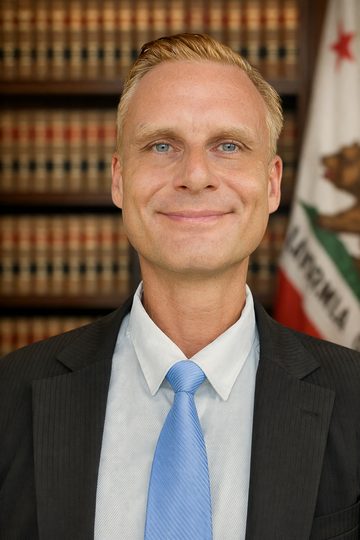
Sergei Tokmakov, Esq.Admitted in California (Bar No. 279869) and Washington (WSBA No. 65720). My law firm won the 2026 American Legal Technology Awards, Law Firm category.
What does a law firm look like when artificial intelligence is not merely a drafting assistant, but part of its operating infrastructure?
I am building that law firm.
I am Sergei Tokmakov, Esq., an attorney admitted in California (Bar No. 279869) and Washington (Bar No. 65720). I operate a solo, written-only legal practice. My law firm won the 2026 American Legal Technology Awards in the Law Firm category.
My practice uses coordinated AI systems for legal research, drafting, engineering, document processing, verification, publication and operational management. These systems work within defined responsibilities, exchange structured information and use controls intended to identify errors before and after release.
The AI Systems Lab documents how this infrastructure actually works. It describes what I have built, what I am developing, where the systems have failed and how those failures have informed subsequent engineering decisions.
This is not a collection of hypothetical AI workflows or demonstrations of isolated prompts. It is documentation of the operating infrastructure behind a working legal practice and a website containing approximately 11,700 static pages.
For law firm owners, managing partners, general counsel and legal operations professionals, the purpose is practical: to demonstrate how an organization can move beyond individual AI assistants toward coordinated, testable and accountable AI operations.
The objective is not to eliminate every mistake. It is to build systems in which mistakes are more likely to be detected, investigated, corrected and prevented from recurring.
The case studies below reflect operational records from November 29, 2026. I distinguish completed work from systems still under development, and automated verification from personal attorney review.
Live operating numbers
Generated from the systems themselves at publish time (November 29, 2026 08:41 PST). Definitions are below.
Most discussions about legal AI begin with the choice of a model. I approach the problem differently. The more consequential question is how to organize responsibilities, information, verification and authority around the models.
My operating model separates legal reasoning from engineering, execution and independent verification. Several Claude Code sessions operate across two Macs. ChatGPT handles designated legal reasoning tasks, while Claude handles the engineering and operational work required to turn those outputs into usable systems.
| Layer | What It Does | Control |
|---|---|---|
| Attorney direction | I establish practice policies, approve operating decisions, define engagement boundaries and determine how AI-generated work may be used. | Approval of a workflow is distinguished from personal review of its individual substantive outputs. |
| Legal reasoning | Legal reasoning and designated drafting tasks are routed to GPT through ChatGPT, using its newest model at Extra High reasoning effort. | Legal outputs are subject to designated verification procedures. Model reasoning is not treated as proof of legal accuracy. |
| Engineering and execution | Claude Code handles engineering, extraction, testing, deployment and related operational tasks. | Responsibilities are divided among sessions with defined operational lanes. |
| Operational coordination | A designated MAIN Claude Code session owns sends, releases and audits. Helper sessions perform work within their assigned lanes. | Defined ownership reduces conflicting actions and ambiguity over which session is responsible for execution. |
| Cross-model communication | A system called Claude Bridge allows Claude and ChatGPT to exchange briefs and case notes. It uses a Cloudflare Worker with storage, accessed by Claude through a REST API and by ChatGPT through an MCP connector. | Information can be exchanged through a shared communication mechanism rather than relying exclusively on separate conversation histories. |
| Communication safeguards | Pre-send safety hooks check outgoing communications against designated operational restrictions. | Checks occur before sending. Automated safeguards remain subject to their implemented rules and coverage. |
| Commitment management | A promise docket records commitments and associated deadlines. | Outstanding commitments have an operational record that can be checked against their deadlines. |
| Commercial consistency | One pricing configuration feeds the quote form and engagement letters. | Pricing is maintained through a common configuration rather than independently duplicated across those systems. |
| Engagement infrastructure | An electronic engagement-letter workroom supports e-signed legal engagements. | Engagement documentation provides a defined boundary for the professional relationship. |
| Publication infrastructure | Approximately 11,700 static website pages are hosted on Cloudflare R2. | Build checks, release verification and post-publication audits provide separate opportunities to detect defects. |
| Independent verification | Separate Claude sessions can examine work produced by other sessions, including published pages and individual legal claims. | An independent session provides an additional check, but its agreement with another model does not independently establish that a conclusion is correct. |
Why I Separate These Responsibilities
A single AI conversation can produce an impressive document. An operating system must address a substantially different problem: how work moves from instruction to execution, who owns each action, how outputs are verified and what happens when an error is discovered.
Separating responsibilities creates identifiable points at which work can be examined and challenged. It also makes it easier to identify whether a failure originated in legal reasoning, source verification, extraction, software implementation or deployment.
That distinction matters because each category of failure requires a different corrective action. A stronger drafting prompt will not fix a defective website builder. An improved deployment process will not establish the accuracy of a legal citation.
I use AI models as components of an operating architecture, not as substitutes for that architecture.
Date: November 29, 2026. All times below are Pacific Standard Time.
This case study documents the creation, publication and corrective audit of a new practice area, including two legal resource hubs, four service package pages and two substantive legal articles.
The work involved legal drafting, source verification, content extraction, website engineering, publication, mobile testing and an independent post-release audit.
Approximately 92 minutes elapsed between my approval of the initial plan and the corrected release.
Attorney involvement: I approved the plan and three operating defaults. One expressly permitted publication after GPT had drafted the legal substance and Claude had checked the sources, with my reading of the live pages to follow publication. I did not personally review the substantive legal content before it was published.
Accordingly, this case study demonstrates an AI-directed production and verification workflow. It does not demonstrate personal attorney review of every published legal proposition.
The Operational Timeline
| Time (PST) | Activity | Recorded Result |
|---|---|---|
| Approximately 01:00 | Attorney direction and approval | I approved the launch plan and three operating defaults, including the publication and review sequence. |
| Approximately 01:25 | Parallel legal drafting | Five GPT drafting jobs began in parallel, covering two resource hubs, four package pages and two articles. |
| Approximately 01:45 | Drafting completed | All five jobs finished, producing 364,702 characters of output in total. |
| Following drafting | Parallel content extraction | Five extraction agents copied the answers from the browser. Each extracted answer was verified by its SHA-256 hash. |
| Before publication | Content and structural checks | Automated lint checks examined voice, prohibited claims and HTML structure. |
| Before publication | External citation checks | 172 external citation links were checked. Links requiring additional examination were subjected to browser-based verification. |
| Before publication | Mobile layout checks | Testing at a viewport width of 390 pixels detected zero horizontal overflow. |
| 02:09:26 | Publication | The release was published. |
| 02:10:28 | Live release verification | 36 of 36 host checks passed, covering 18 paths on two hostnames. |
| After publication | Independent release audit | A separate Claude session recorded a PASS on its release audit and subsequently fact-checked 47 specific legal claims. |
| After independent audit | Corrective engineering | Nine corrections were incorporated through a correction map. A defective content-length restriction was removed, and an additional lint check was introduced. |
| 02:32:17 | Corrected release | The corrections were live. The independent recheck passed. |
What the Verification Results Actually Show
The operational records distinguish different kinds of verification. Passing a website availability check is not the same as confirming a legal claim. Confirming that content was extracted accurately is not the same as confirming that the extracted content is legally correct.
| Verification Measure | Recorded Result | What It Establishes |
|---|---|---|
| Draft extraction integrity | Five of five answers verified by SHA-256 hash | The extracted answers matched the content against which their hashes were checked. |
| External citation link checks | 172 links checked | External references were subjected to link verification, with additional browser checks where necessary. |
| Browser-based citation rechecks | 63 of 90 OK; 8 bot-walled; 18 unreachable from the network; 1 genuinely broken and fixed | The check distinguished confirmed access, access restrictions, unresolved network failures and a confirmed broken link. |
| Mobile layout | Zero horizontal overflow at 390 pixels | The tested release satisfied that particular mobile layout condition. |
| Live host checks | 36 of 36 passed | The tested paths passed their designated host checks at the time of verification. |
| Independent legal claim review | 44 of 47 confirmed; 1 wrong citation link; 2 not verifiable from the network | The independent session confirmed the specified claims it could verify and identified exceptions requiring attention. |
| Corrective release | Nine corrections incorporated; independent recheck passed | The corrective release passed the subsequent independent checks. |
These are recorded results for a particular release. They are not general accuracy rates for AI-generated legal work, and I do not extrapolate them to other projects.
What Went Wrong and How It Was Caught
The initial release was not perfect. The independent audit identified problems that illustrate why I consider corrective engineering at least as important as the initial production process.
Failure Mode: Citation Accuracy and Source Accessibility
Government websites sometimes block scripted requests. Of the 90 links rechecked in a real browser, 63 were accessible, eight encountered bot restrictions, 18 could not be reached from the network used for verification, and one was genuinely broken.
The confirmed broken link was fixed. The access failures were not automatically classified as either correct or incorrect citations.
The subsequent independent review of 47 specific legal claims also identified a wrong citation link and two claims that could not be verified from that network.
This distinction is fundamental. A functioning URL does not establish that the linked source supports a proposition. Conversely, an inaccessible government website does not establish that a proposition is false. An unresolved verification result must remain identifiable as unresolved.
Failure Mode: A Website Builder Silently Truncated Legal Content
The independent audit identified two sentences that had been truncated by a website builder imposing a 220-character cap.
The underlying problem was not the legal drafting model. It was a software restriction introduced during the construction of the published pages.
Correcting the affected sentences alone would have left the defect in place. Instead, the cap was removed at its root. An additional lint check now blocks any visible paragraph that lacks end punctuation.
This is an example of converting an observed production failure into a persistent engineering control. The punctuation check cannot detect every possible truncation or substantive omission, but it addresses a detectable symptom of the failure that occurred.
Failure Mode: Factual and Legal Precision
The independent audit also identified three precision issues:
- Award attribution: The 2026 American Legal Technology Award belongs to my law firm, not to me personally.
- Legislative citation: The citation style for a New York chapter required correction.
- Regulatory chronology: FDA guidance issue and reissue dates required greater precision.
These are the kinds of distinctions that matter in professional legal publishing. Fluent writing can obscure an inaccurate attribution, an imprecise statutory citation or an incorrect regulatory chronology.
The audit provided a separate opportunity to examine those details.
Preventing Corrections From Being Lost During a Rebuild
Nine corrections were incorporated through a correction map rather than through isolated changes to the published pages.
The purpose of the correction map is to preserve those fixes in the build process so that a subsequent rebuild cannot reintroduce the corrected content.
The corrected release was live at 02:32:17, and the independent recheck passed.
What This Case Study Demonstrates
The significant result is not simply that the new practice area was produced quickly. It is that legal drafting, extraction, engineering, publication, independent examination and corrective work were coordinated within the same operational process.
The release also demonstrated identifiable weaknesses in that process. I include them here because an account that reported only successful deployment checks would provide an incomplete picture of the system.
A credible AI operating system should be evaluated not only by what it produces, but also by how it responds when its output is wrong.
Status: In development as of November 29, 2026.
I am building an AI Healthcare Launch Risk Analyzer around a different architectural principle: use AI to assist in constructing and maintaining the regulatory knowledge base, but do not rely on a generative model to interpret every visitor submission.
AI-assisted legal content production and a regulatory matching application present different engineering problems. For the latter, reproducibility, source provenance, version control and test coverage are particularly important.
The analyzer is being developed around the following components.
A Versioned Regulatory Registry
Instead of treating legal rules as unstructured passages that a model must interpret anew, I am building a registry of individual regulatory records.
Each record carries:
- An official source link.
- A verbatim excerpt checked against the live official source.
- A snapshot hash.
- Regulatory status and relevant dates.
- A review state identifying the record as candidate, verified or approved.
These fields address distinct questions. What is the authority? What does the source actually say? Which version was examined? What is the status of the authority? Where does the record stand in the review process?
The review states also make it possible to distinguish a proposed regulatory record from one that has undergone source verification or received approval under the registry workflow.
Approval is a workflow designation. It does not, by itself, represent personal attorney review or establish that a record is legally sufficient for every application.
A Deterministic Matching Engine
The analyzer is being built around a deterministic matching engine supported by unit tests and scenario regression tests.
The distinction from a conventional chatbot is important. The matching operation is designed to follow implemented rules, rather than generate a new legal interpretation of each visitor submission.
With the same inputs, registry version and implemented rules, a deterministic engine should produce the same matching result. When a result is unexpected, its behavior can be investigated through the applicable records and matching logic.
Unit tests examine individual components. Scenario regression tests examine whether defined combinations of circumstances continue to produce their expected results as the system changes.
Passing these tests establishes that the implemented behavior satisfies the tested expectations. It does not independently establish that the underlying expectations are legally correct or that all relevant circumstances have been anticipated.
No Model Reads Visitor Input
GPT and Claude assist in drafting and checking regulatory records outside the visitor-facing matching process.
No AI model reads visitor input in the analyzer architecture.
This separates AI-assisted knowledge production from the operation of the matching engine. It avoids requiring a generative model to formulate an individualized legal answer from each visitor submission.
That architectural choice is not a claim that the application satisfies every applicable privacy, confidentiality or security requirement. Those questions require separate analysis.
Regulatory Watch: Detecting Changes Without Automatically Publishing Them
I am also developing a Regulatory Watch prototype intended to re-fetch official sources, compare their contents with prior snapshots and open review items when changes are detected.
The monitoring process is separated from publication.
- Re-fetch the official source.
- Compare the retrieved content with the previous snapshot.
- Identify changes requiring examination.
- Open a review item.
The Regulatory Watch prototype never automatically publishes regulatory changes.
A detected difference is not necessarily a change in the law. It could reflect an editorial change, a revised webpage structure, a new document version or another change whose legal significance requires investigation.
The purpose of monitoring is to surface changes for review, not to allow an automated process to declare their legal effect.
Why This Architecture Matters Beyond Healthcare
The broader design is applicable to legal operations involving structured authorities, defined decision rules and recurring changes in source material.
The same architectural principles could inform internal legal knowledge systems, contract review rules, policy registers, regulatory intake tools and other applications where reproducibility matters more than conversational flexibility.
Those are potential applications of the design, not representations that I have already built or deployed them.
The healthcare analyzer remains under development. I am not presenting completion statistics or claiming that its regulatory coverage, matching logic or monitoring system has been comprehensively validated.
AI governance becomes meaningful when it is translated into operational controls that affect how work is produced, checked, released and corrected.
I distinguish between controls that protect the integrity of an output, controls that examine its substantive accuracy and controls that govern what the system is permitted to do.
The Verification Layers
| Control | Purpose | Limitation |
|---|---|---|
| Defined operational lanes | Assign responsibilities to designated AI sessions and establish ownership of execution. | Defined responsibilities do not guarantee that every instruction will be interpreted or executed correctly. |
| Cross-model verification | Allow work produced by one model to be examined by another. | Different models can share the same misconception, rely on the same inaccurate information or independently reach the same wrong conclusion. |
| Independent session audits | Examine completed work separately from the session responsible for producing it. | Operational separation is not equivalent to an external professional audit or independent certification. |
| Official source verification | Check legal propositions and regulatory records against official authorities. | Sources may be inaccessible, outdated, incomplete or insufficient to resolve a particular legal question. |
| Verbatim source excerpts | Preserve the actual language supporting a regulatory record. | An accurate quotation can still be interpreted incorrectly or taken out of its legally relevant context. |
| Cryptographic hashes | Verify content integrity or identify whether a source snapshot has changed. | A matching hash establishes content identity, not factual accuracy, legal validity or completeness. |
| Automated lint checks | Detect designated writing, prohibited-claim, punctuation and structural defects. | Lint checks detect implemented conditions. They cannot identify every possible defect in legal reasoning or meaning. |
| Unit and scenario regression tests | Examine implemented behavior against defined expectations in the analyzer under development. | Tests provide evidence about covered behavior, not untested circumstances or the correctness of every underlying legal assumption. |
| Deployment verification | Check whether released pages satisfy designated operational conditions. | A successful deployment does not establish substantive accuracy. |
| Correction maps | Preserve identified corrections through subsequent rebuilds. | They address identified defects, not unknown errors elsewhere in the system. |
| Pre-send safety hooks | Check outgoing communications against implemented operational restrictions before sending. | They are limited by their rules, implementation and coverage. |
| Promise docket | Maintain a record of commitments and their deadlines. | Recording a commitment does not guarantee its timely performance. |
| Centralized pricing configuration | Maintain consistency between the quote form and engagement letters. | A common configuration can still contain an incorrect price or scope definition. |
| Regulatory change monitoring | Identify source changes and create review items through the Regulatory Watch prototype. | Monitoring cannot guarantee detection of every legal development. The prototype does not automatically publish changes. |
Model Agreement Is Not Evidence of Legal Correctness
If GPT reaches a legal conclusion and Claude agrees with it, the agreement does not make that conclusion legally correct.
The relevant authority remains the applicable statute, regulation, judicial decision or other legally significant source. Its application requires attention to the facts, jurisdiction, effective date, exceptions and surrounding legal context.
I use cross-model review to create additional opportunities to detect errors. I do not treat agreement between models as a substitute for examining the underlying authority.
Attorney Review and Automated Review Are Different Things
I distinguish among AI-generated work, automated checks, source verification, independent AI review and personal attorney review.
These descriptions are not interchangeable.
My approval of a production workflow does not mean that I personally reviewed every document or legal proposition produced through it. Likewise, approval of a release does not establish that I examined every substantive statement before publication.
Where I describe work as personally reviewed by me, that description must correspond to review that I actually performed.
This distinction is particularly important for law firms considering AI implementation. Increasing operational capacity does not eliminate the need to determine where professional judgment and individual attorney involvement are required.
Corrective Engineering Rather Than Isolated Error Correction
When a mistake is discovered, I consider whether it reflects an isolated error or a recurring weakness in the underlying process.
The truncated sentences described in the first case study illustrate the distinction. Restoring the missing text corrected the visible defect. Removing the underlying character cap addressed its cause. Adding a lint check introduced another opportunity to detect a related failure.
I consider that progression important:
- Identify the defect.
- Determine where it originated.
- Correct the affected output.
- Address the underlying cause where possible.
- Preserve the correction through subsequent builds.
- Recheck the corrected result.
This is the operating principle behind the Lab. The quality of an AI system depends partly on its ability to turn discovered failures into better controls.
AI demonstrations often emphasize the volume of generated content or the speed of production. Those measures can be useful, but they say relatively little about source quality, test coverage or corrective discipline.
The live numbers at the top of this page use the definitions below. Each measure has an explicit denominator so that a displayed count or percentage can be interpreted in context.
The figures are generated from the registry, test and snapshot files at publish time. They measure process coverage, not the accuracy of the legal content, and they do not extrapolate to other work.
| Metric | Definition and Numerator | Denominator | Interpretation |
|---|---|---|---|
| Records verified | The number of regulatory records in the measured registry version that have completed official source and verbatim-excerpt verification and are designated verified or approved. | All regulatory records in that registry version, including candidate records and records awaiting verification. | Measures source-verification progress within the existing registry. It does not measure coverage of every applicable law. |
| Scenarios passing | The number of defined scenario regression tests that passed in the measured test run. | All scenario regression tests designated for that run, including failed, skipped and unexecuted scenarios. | Measures tested behavior against defined expectations. It does not establish correctness outside the tested scenarios. |
| Sources monitored | The number of distinct official sources successfully re-fetched and compared with prior snapshots during the stated reporting period. | All distinct official sources designated for monitoring during that period, including sources that could not be accessed or successfully compared. | Measures completed monitoring activity within the designated source set. It does not establish that every relevant legal development has been detected. |
| Corrections logged | The number of distinct corrective items entered into the correction log during the stated reporting period. | All distinct corrective items identified in the corresponding documented audit and review findings during that period. | Measures whether identified defects are being captured in the corrective process. It does not measure the number of undiscovered errors. |
Rules for Interpreting the Metrics
- Each measure should identify its applicable registry version, test run or reporting period.
- Unverified records must not be counted as verified.
- Skipped or unexecuted scenarios must not be counted as passing.
- Failed source retrievals must not be counted as completed monitoring checks.
- Logging a correction must not be confused with implementing and independently rechecking it.
- An unavailable or zero denominator must not be represented as a perfect completion rate.
- The absence of identified errors must not be represented as proof that no errors exist.
I intentionally include corrections as a visible operational measure. A system that records more corrections may have better detection and reporting practices than one that records none. The number requires context rather than an automatic positive or negative interpretation.
These metrics are designed to make the system more understandable and accountable, not to create a simplified score of legal accuracy.
There is a considerable difference between demonstrating an operational capability and establishing that it is suitable for every professional application.
I limit the claims made on this page accordingly.
- I do not claim error-free automation. The documented release audit identified real defects. Future systems and releases can contain other defects.
- I do not claim that every published legal proposition received personal attorney review. The first case study expressly involved publication before my personal substantive review.
- I do not claim that AI model agreement establishes legal accuracy. Independent model review is an additional verification mechanism, not conclusive evidence.
- I do not claim regulatory compliance certification. The Lab is not a certification program, and its controls do not establish compliance with every applicable legal or professional requirement.
- I do not claim comprehensive regulatory coverage. A versioned registry remains limited by its included authorities, review quality and current state of development.
- I do not claim that automated tests establish complete legal correctness. Tests examine defined behavior against defined expectations.
- I do not claim that source monitoring guarantees current legal advice. Sources can change, become inaccessible or omit developments occurring elsewhere.
- I do not claim that the healthcare analyzer is complete. It is being built, and I distinguish its architectural design from demonstrated production results.
- I do not claim that another law firm can reproduce my results within the same timeframe. The documented launch occurred within my existing operating infrastructure.
- I do not claim guaranteed financial returns, productivity increases or implementation outcomes. Those results depend on circumstances that vary between organizations.
The case studies intentionally exclude client names and matter details. They demonstrate operational architecture using documented system and publication activities rather than confidential client representations.
The information on this page describes my operating model. It is not a recommendation that every law firm adopt the same review sequence, delegation structure or publication policy.
For law firms and legal teams
A law firm can subscribe to several AI products without developing a coherent AI operating system.
Individual tools may improve particular tasks while leaving the larger organization dependent on manual coordination, inconsistent instructions, undocumented decisions and repeated verification work.
I approach implementation at the organizational level. The relevant questions include how work enters the system, how responsibilities are assigned, how information is exchanged, what requires approval, how errors are detected and how corrections are preserved.
The systems documented on this page provide a practical foundation for considering those questions in another legal organization.
Where These Principles Can Be Applied
| Legal Operations Problem | Architectural Approach |
|---|---|
| Attorneys repeatedly provide the same background and instructions to different AI tools. | Structured briefs, shared operational context and defined information exchange. |
| Multiple AI tools produce overlapping or conflicting work. | Defined operational lanes, execution ownership and separate verification responsibilities. |
| Legal research contains plausible but unsupported conclusions. | Official source verification, preserved source excerpts and identifiable unresolved questions. |
| Errors are corrected manually but recur in later work. | Persistent correction mechanisms, root-cause analysis and regression testing. |
| Outgoing communications create unintended commitments or other operational risks. | Defined communication authority, pre-send controls and commitment tracking. |
| Quotes and engagement documents contain inconsistent commercial terms. | A common configuration governing the commercial information used by those systems. |
| Legal knowledge becomes outdated as authorities change. | Versioned regulatory records, source monitoring and review-controlled updates. |
| Management cannot distinguish completed work from unchecked AI output. | Explicit review states, documented verification results and clear definitions of completion. |
These are architectural applications of the principles described in the Lab. They are not representations that a particular prospective client's systems have already been assessed or that every proposed application is appropriate for that client.
AI Systems Diagnostic for Law Firms
The appropriate starting point for many firms is not another AI subscription. It is an assessment of the existing operation and the opportunities to improve how AI-assisted work is organized, controlled and verified.
The AI Systems Diagnostic is a written advisory engagement resulting in a diagnostic and a 90-day implementation roadmap.
Its purpose is to help firm leadership make informed decisions about AI implementation before committing to an implementation project.
Unlike a standard legal package focused on a defined document or legal issue, this engagement concerns the firm's operating architecture and the relationship among its workflows, AI systems, governance and implementation priorities. The broader organizational analysis and tailored roadmap account for its higher fee.
Fixed fee: $5,000.
The diagnostic is intended for law firm owners, managing partners and other decision-makers seeking a structured approach to AI adoption rather than isolated tool recommendations.
The 90-day roadmap is a planning deliverable. It is not a representation that implementation will be completed within that period.
Request an AI Systems Diagnostic
AI Practice Implementation Sprint
The AI Practice Implementation Sprint is intended for organizations that want to move from architectural planning toward implementation of a defined AI-assisted operational initiative.
The scope must be established through the engagement process. I do not assume that every organization needs the same technical architecture, the same division of responsibilities or the same verification controls.
This engagement carries a higher fee than a standard legal package because it concerns implementation of an operational initiative rather than production or review of a standalone legal document. Its value depends on addressing the relationships among workflow design, system behavior, verification and organizational controls within the agreed scope.
Fixed fee: $10,000.
The specific implementation work and deliverables are defined in the engagement scope. The Sprint is not an unlimited software development engagement, a complete law firm transformation or a guarantee that every component of the Lab will be reproduced in another organization.
Request an AI Practice Implementation Sprint
How an Engagement Begins
I operate a written-only practice. Initial requests, scope discussions and engagements are handled in writing rather than through telephone or video calls.
A useful initial request describes the organization's existing AI use, the operational problem it wants to solve, any relevant constraints and what it would consider a successful outcome.
The engagement process establishes the scope and applicable terms through an electronic engagement letter.
For an organization that has not yet determined what it should implement, the Diagnostic provides the planning foundation. For an organization with an identified implementation objective, the Sprint may be the more appropriate starting point, subject to scope.
Related Resources
AI Systems Diagnostic (for Law Firms)
A written diagnostic of your practice workflows and a 90-day roadmap.
Request this packageAI Practice Implementation Sprint
Building the first controlled workflows with you, with tests and approval gates.
Request this packageFrequently Asked Questions
Is the AI Systems Lab a software product?
The Lab is a public record of the AI operating infrastructure I use and the systems I am developing. The services offered on this page are a written AI Systems Diagnostic and an AI Practice Implementation Sprint. I am not offering a standardized software license or a complete downloadable law firm operating system through this page.
Do you personally review everything produced by your AI systems?
No. My involvement varies according to the work and the applicable review process. In the documented practice-area launch, I approved the workflow but did not personally review the substantive legal content before publication. I distinguish personal attorney review from AI drafting, automated verification, source checking and independent AI review. I do not describe work as personally reviewed by me unless that review actually occurred.
Why do you use both ChatGPT and Claude rather than relying on one model?
I assign them different operational responsibilities. GPT handles designated legal reasoning and drafting tasks, while Claude handles engineering, extraction, testing, deployment and independent checks. This division creates additional opportunities to examine work and identify where failures originate. I do not assume that using different models eliminates mistakes or that their agreement establishes legal correctness.
Can your systems make legal mistakes?
Yes. The first case study documents citation problems, precision issues and a software defect that truncated legal content. The purpose of the verification and corrective controls is to improve the likelihood that mistakes are detected, investigated and addressed. Neither automated review nor independent model review guarantees accuracy.
Does the AI Healthcare Launch Risk Analyzer send visitor submissions to an AI model?
No. The analyzer is being developed around a deterministic matching engine. GPT and Claude assist with the preparation and checking of regulatory records outside the visitor-facing matching process. No model reads visitor input in this architecture. The analyzer remains under development, and this design choice is not a comprehensive privacy or security certification.
Does implementing these systems make a law firm compliant with its professional obligations?
No. An AI operating architecture can support governance, verification, documentation and defined review responsibilities. Whether a particular implementation satisfies applicable professional obligations depends on its actual design, use, jurisdiction, engagement context and other relevant circumstances. I do not offer compliance certification or guarantee that adopting my operating model will satisfy every applicable obligation.
Should my firm start with the Diagnostic or the Implementation Sprint?
The Diagnostic is generally the appropriate starting point when an organization needs to determine its implementation priorities and develop a structured roadmap. The Sprint is intended for a defined implementation initiative. The Diagnostic costs $5,000 because it involves organization-specific analysis and a written 90-day roadmap rather than a standard legal document engagement. The Sprint costs $10,000 because it concerns scoped operational implementation rather than standalone legal drafting. Both engagements begin with a written request, and I establish the applicable scope through the engagement process. I do not conduct introductory calls.
Sergei Tokmakov, Esq., Terms.Law. Admitted to practice in California (State Bar No. 279869) and Washington (WSBA No. 65720). My law firm won the 2026 American Legal Technology Awards in the Law Firm category.
I handle matters in writing: no calls or video meetings. Contact: owner@terms.law.